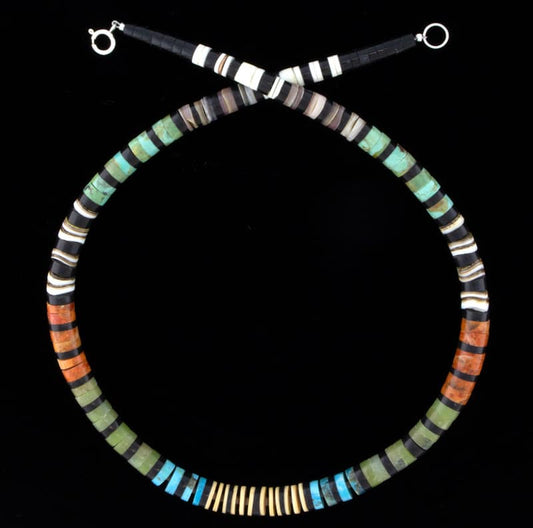
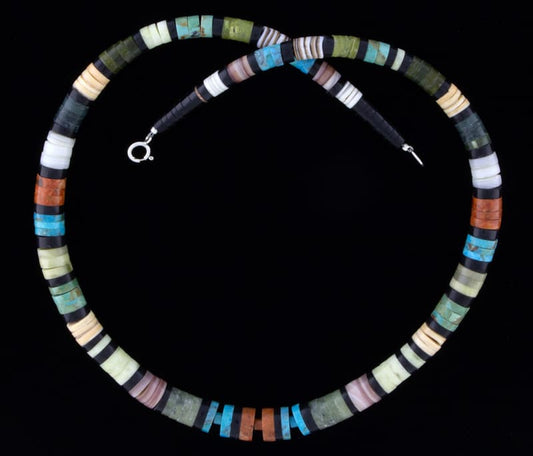
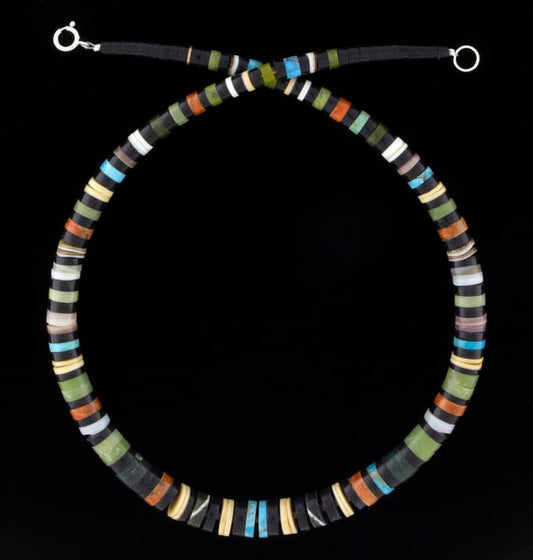
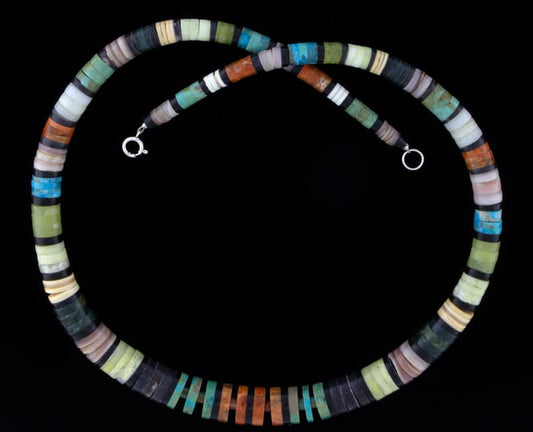
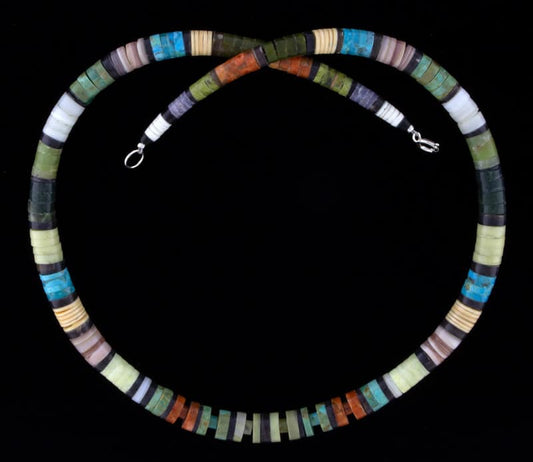
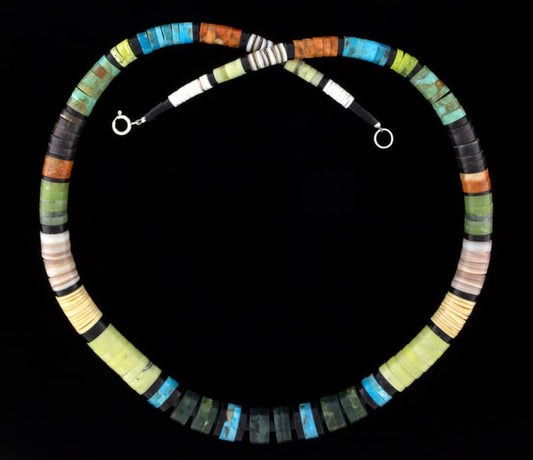
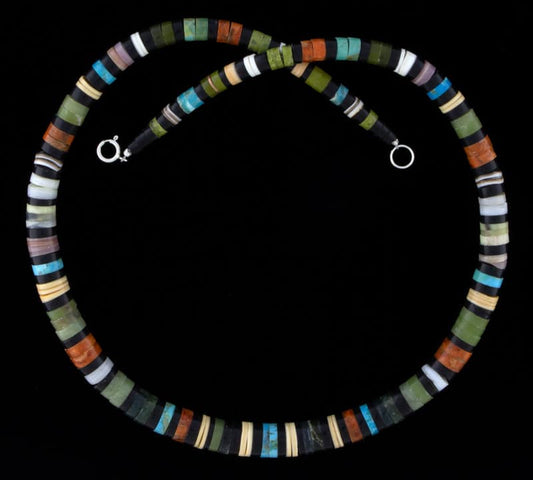
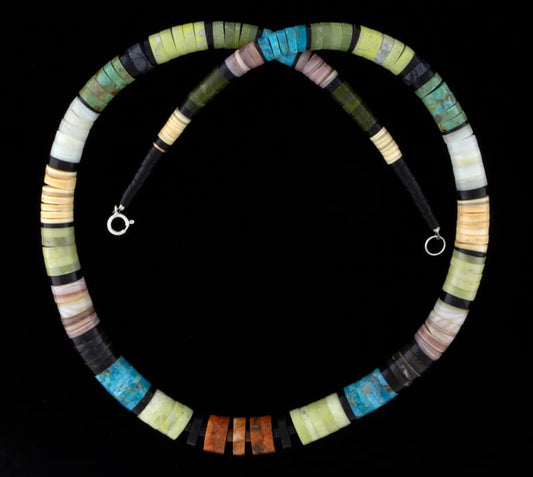
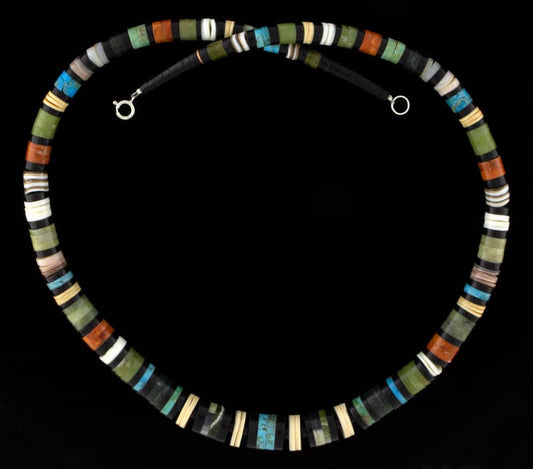
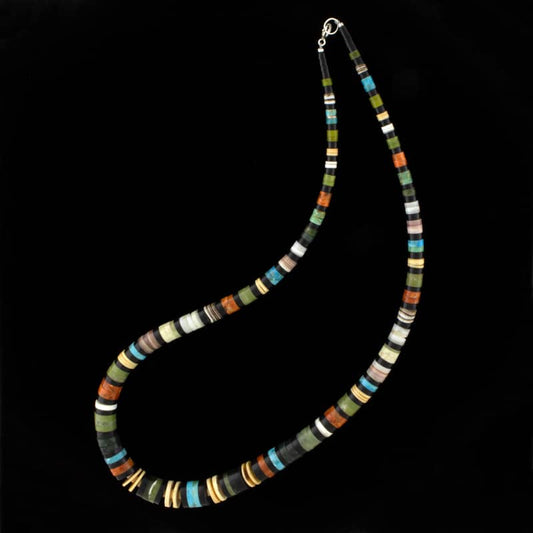
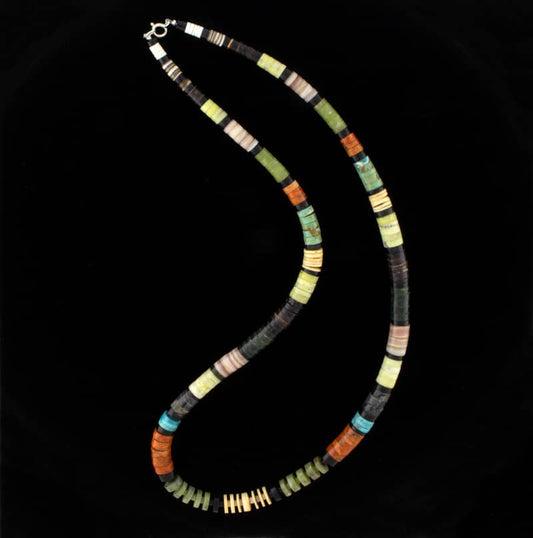
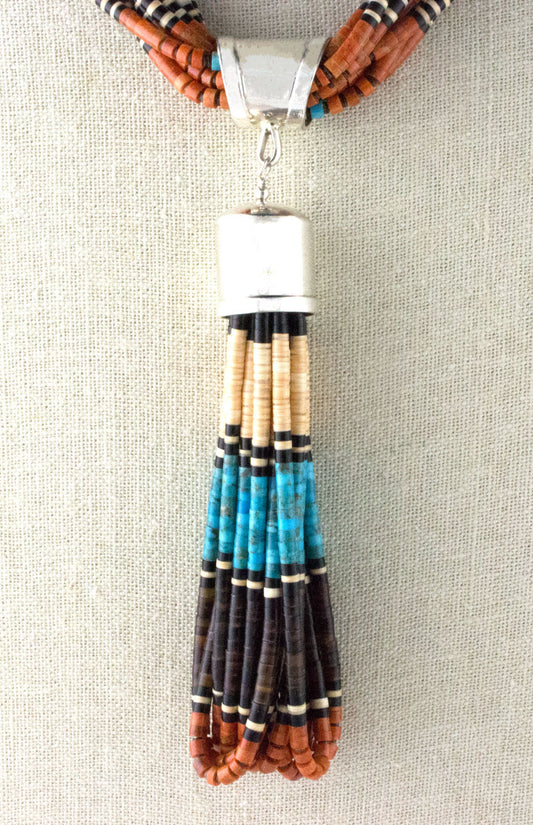
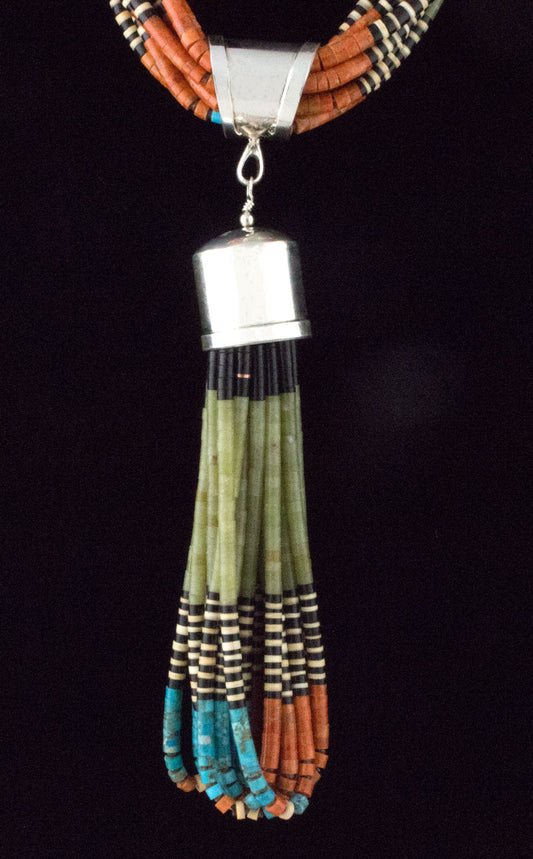
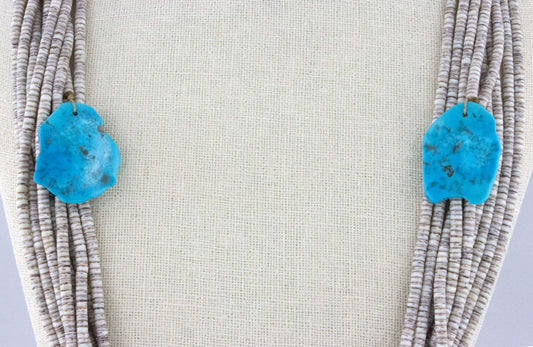
Gerard and Mary L. Calabaza jewelry comes from a Kewa Pueblo (Santo Domingo Pueblo) beadwork tradition centered on handmade heishi jewelry. Their necklaces are the heart of the collection, with earrings and bolo ties offering the same careful use of color in different forms. Pieces feature natural materials such as shell, turquoise, jet, pipestone, coral, serpentine, and Sleeping Beauty turquoise. For jewelry lovers drawn to authentic Native American heishi jewelry, their work offers enduring technique, wearable color, and the authentic feel of a family-taught art form.
Meet Gerard and Mary L. Calabaza
Gerard and Mary L. Calabaza are a husband-and-wife team of Kewa Pueblo jewelers from New Mexico. Their documented body of work includes multi-colored heishi necklaces, earrings, bracelets, anklets, pendants, bolos, and inlay pieces.
Family teaching shaped both artists from an early age: Gerard learned to make heishi necklaces from his parents, Pula and Delphanita Calabaza, when he was 13. Mary began learning jewelry and pottery-making from her parents at age 12, and she credits her mother with teaching her to drill, grind, and slice stones.
Their shared studio process has a clear division of labor; Gerard is often described as cutting and preparing the materials, while Mary strings and finishes the pieces. That partnership of skills gives Gerard and Mary L. Calabaza jewelry its clean rhythm: measured beads, thoughtful color placement, and a finish that feels comfortable against the skin.
Their work has also earned formal recognition through their 2017 Southwestern Association for Indian Arts honors, which include Best of Division Necklace, 1st Place Necklaces, and 2nd Place Coordinated Sets. The awards fit the work: strong bead sizing and confident color are usually the first details people notice.
Discover Gerard and Mary L. Calabaza Jewelry
Heishi sits at the center of the Calabazas' work. The word comes from the Keres language and means shell, although these days heishi refers more broadly to small beads made from natural materials. The process is simple to describe and difficult to do well. Materials are cut into small pieces, drilled, shaped, polished, and then strung into even, flexible strands.
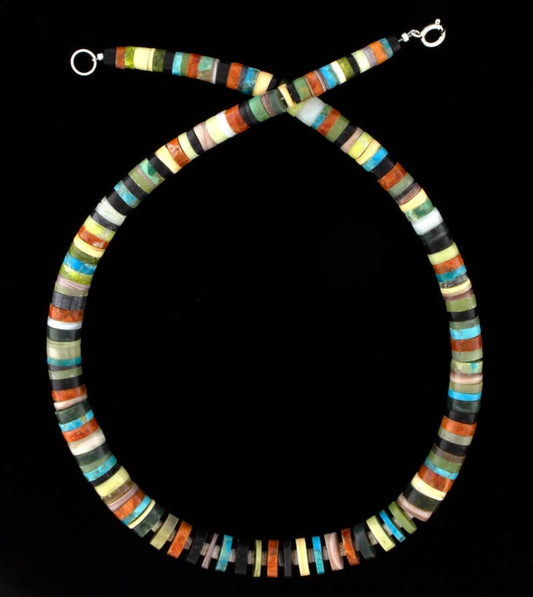
Heishi is slow work. Every smooth strand begins with small pieces of material that must be prepared, shaped, polished, and arranged with care, and a single necklace can include hundreds of individually made beads. That’s why the finished pieces have a quiet precision. Multi-color combinations may include shell, turquoise, jet, pipestone, coral, serpentine, and other natural materials, with each strand arranged to feel balanced rather than busy. Some necklaces are simple enough for everyday wear; longer multi-strand pieces have more presence and are best saved for special occasions, especially when jaclas or turquoise side slabs are part of the design.
Heishi Necklaces
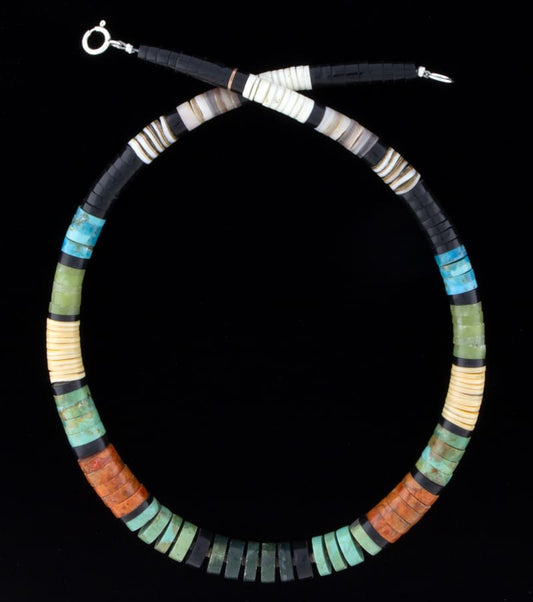
Graduated heishi necklaces typically move from smaller beads near the back of the neck toward larger beads at the front. That gentle change in scale gives the strand a dimensional and finished quality. Multi-strand necklaces, including 10-strand forms, offer a fuller look while keeping the beadwork orderly. Jacla pendants add movement near the front of the necklace, and select pieces may include natural Sleeping Beauty turquoise side slabs.
Because each necklace is handmade by Gerard and Mary L. Calabaza, the exact materials and bead arrangement can differ from piece to piece. Shell, turquoise, jet, pipestone, coral, serpentine, and other natural materials may appear throughout the collection. Those small shifts in tone and spacing are part of the reason a multi-color heishi necklace feels personal once it is worn.
Heishi Earrings
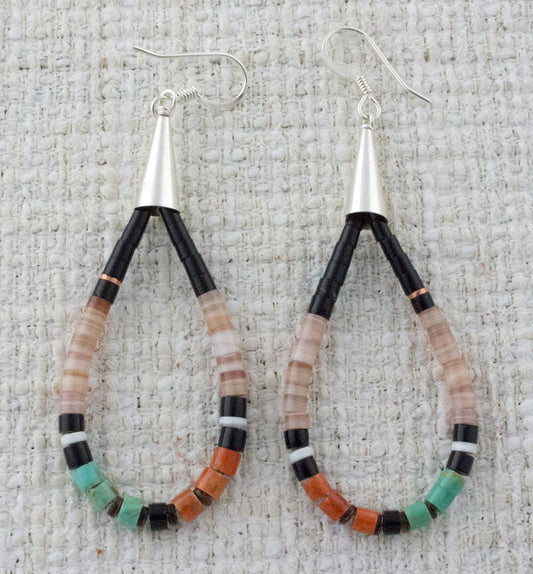
Gerard and Mary L. Calabaza earrings bring the same bead-making technique into a smaller, easily-worn form. SilverTQ currently carries multi-color heishi earrings in single- and double-hoop styles. The appeal is in the balance: The delicate hoop and double-hoop forms give the beads room to move, while the scale stays comfortable enough for regular wear. Color choices, clean spacing, and natural materials create enough contrast to be noticed without overwhelming the ear. Worn with a necklace, they complete the look; worn alone, they still carry the Calabazas' signature style.
Inlay Bolo Ties
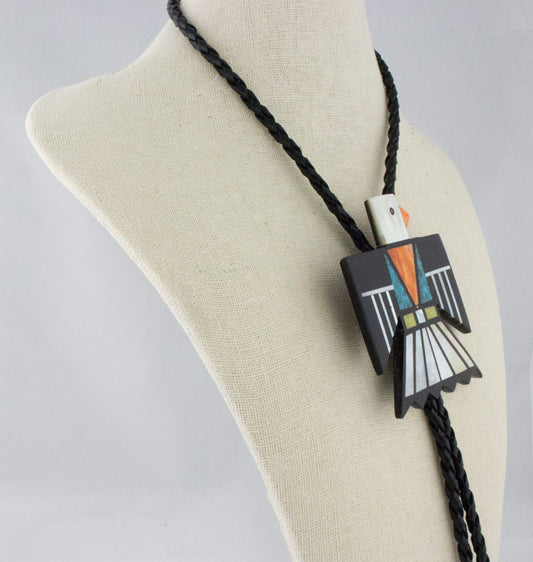
Geranrd and Mary L. Calabazas' inlay work gives this collection a different kind of presence. SilverTQ currently lists one multi-color inlay bolo tie with a Thunderbird motif. Inlay depends on careful stone placement and clean shaping; in a bolo tie, that work becomes the focal point, with the design sitting at the front of the piece. For buyers who appreciate Kewa Pueblo stone technique and want a stronger statement than earrings or a single heishi strand, a Gerard and Mary L. Calabaza bolo tie is a fitting choice.
Shop Gerard and Mary L. Calabaza Jewelry at SilverTQ
SilverTQ offers Gerard and Mary L. Calabaza jewelry for buyers seeking handmade, authentic Native American jewelry by reputable artists. The collection begins with heishi necklaces and extends into earrings and bolo ties for buyers who want the same artistic voice in a variety of formats.
With more than 45 years of experience in the Native American jewelry community, SilverTQ hand-selects each piece with attention to the artist, the materials, and technique. That experience helps buyers shop with confidence, whether they are choosing their first Native American piece or adding a multi-strand heishi necklace to an established collection.
Frequently Asked Questions
Who are Gerard and Mary L. Calabaza?
Gerard and Mary L. Calabaza are a husband-and-wife jewelry team from Kewa Pueblo in New Mexico. They are known for handmade heishi jewelry, especially multi-color heishi necklaces. Their SilverTQ collection also includes earrings and inlay bolo ties.
What is heishi jewelry?
Heishi jewelry is made from small beads that are cut, drilled, shaped, polished, and strung by hand. The word heishi comes from the Keres language and means shell. Modern heishi pieces may include shell, as well as turquoise, jet, pipestone, coral, serpentine, Sleeping Beauty turquoise, and other natural materials.
What types of jewelry do Gerard and Mary L. Calabaza make?
At SilverTQ, the collection focuses on heishi necklaces, heishi earrings, jacla pendants, and inlay bolo ties, although their broader work includes bracelets, anklets, and other jewelry forms.
What materials are used in their heishi necklaces?
Gerard and Mary L. Calabaza’s heishi necklaces may include shell, turquoise, jet, pipestone, coral, serpentine, Sleeping Beauty turquoise, and other natural materials. Since each piece differs, the product description is the best place to confirm the materials used in a specific necklace. All closures and findings are 925 sterling silver.
Can Gerard and Mary L. Calabaza jewelry be worn daily?
Many pieces can be worn regularly, but with care. Heishi jewelry should be removed before swimming, bathing, applying lotions, or using chemical products. Necklaces and earrings should also be stored so the beads are not pressed, pulled, or scratched by harder jewelry.
How should I care for heishi jewelry?
Store heishi jewelry in a soft pouch or a lined jewelry box. After wearing it, wipe the piece gently with a soft dry cloth. Keep it away from chemicals, moisture, and rough contact. Use silver polish only on the sterling silver parts when needed.
Does Gerard and Mary L. Calabaza jewelry include a hallmark or signature?
Hallmarks and signatures can vary by piece. Review the product photos and description for the specific necklace, earring pair, or bolo tie you are considering.
Why buy Gerard and Mary L. Calabaza jewelry from SilverTQ?
SilverTQ focuses on handmade, authentic Native American jewelry from reputable artists, with careful selection and buyer education built into the shopping experience. The Gerard and Mary L. Calabaza collection offers buyers access to Kewa Pueblo heishi necklaces, earrings, and bolo ties, all chosen by a team with decades of experience in the field.