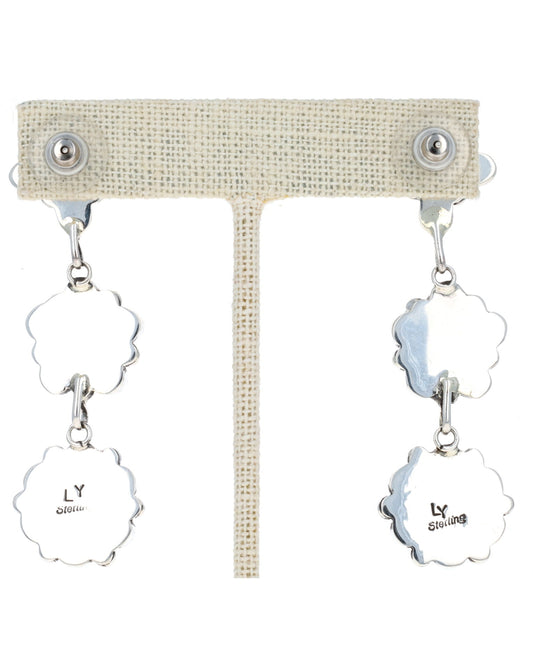
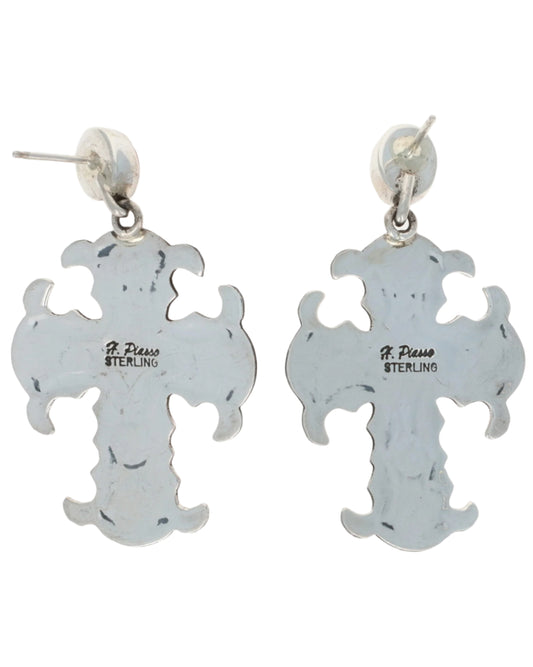
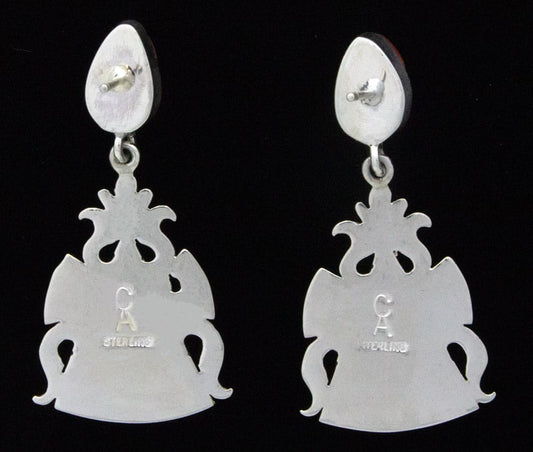
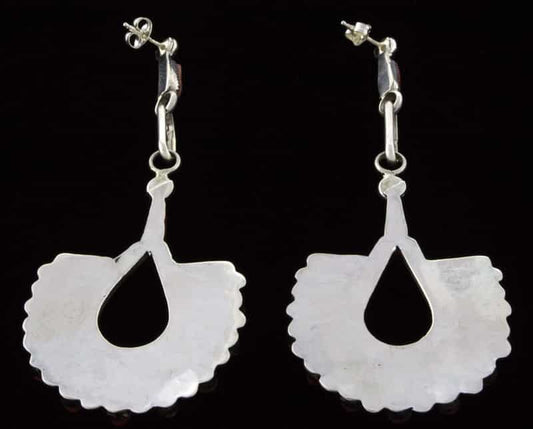
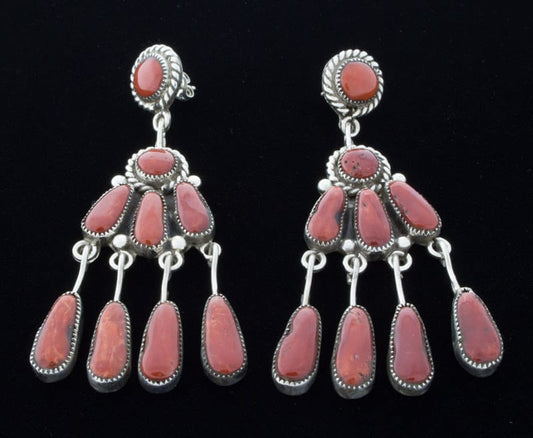
Coral has held a place in Southwest jewelry for centuries, prized for its deep color and the steady hand it takes to set. The earrings in this collection come from renowned Native American artists with years, if not decades, of experience. A few specialize in cluster work, others in more sculptural chandelier and dangle styles, but all specialize in hand-cutting and hand-setting coral.
The History and Meaning of Coral in Native American Jewelry
The story of how coral came to be used in Native American jewelry actually starts clear across the globe. This is how it arrived in the Southwest and what it's come to mean to the artists and communities who work with it.
Where This Coral Comes From
Most of the coral used in Southwest jewelry comes from the Mediterranean Sea, not local waters. It's a marine material that’s been built up over years by tiny organisms called polyps, then cut and polished into beads, cabochons, or slabs an artist can set. Deep red is the color most associated with Native American coral jewelry, though pieces made with pink coral, sometimes called angel skin coral, also show up.
How Coral Reached Southwest Artists
Because it comes from the ocean, coral reached Navajo and Pueblo jewelry making through trade. Spanish traders brought Mediterranean coral to the region in the 1600s, and it quickly became popular for its exceptionally vibrant color. Coral became a marker of wealth in many Southwest communities largely because of its cost and the lengthy process of acquisition. As with turquoise, a necklace or pair of earrings set with coral signaled the status of the person wearing it.
What the Color Red Represents
Red carries weight beyond decoration in Native American design. It's tied to life and, in some traditions, protection, with some communities also connecting it to the earth itself. Navajo, Zuni, Hopi, and Kewa Pueblo artists have all worked coral into their jewelry for generations, each drawing on techniques specific to their own community. SilverTQ has spent over 45 years building relationships with Native American artists, which makes it possible to stock these rare coral pieces.
Styles of Coral Earrings in This Collection
This collection includes a few different techniques, and each earring style handles the coral a little differently.
Chandelier and Dangle Styles
Chandelier and dangle earrings tend to carry more than one piece of coral, set in a silver frame that hangs and moves with the wearer. It's a style built for a bit of drama but without a large central stone, since the movement does a lot of the visual work. In this collection, dangle designs also show up in cross or teardrop shapes, both long-standing motifs in Southwest jewelry.
Cluster and Inlay Work
Cluster earrings group a handful of coral stones close together in one setting, a technique closely tied to Zuni jewelry. Inlay earrings set coral flush or slightly raised against the silver, sometimes next to turquoise, so the two stones sit side by side in a single piece.
How to Style Coral Earrings
Coral's warm tone works well against both sterling silver and 18K gold, so it's easy to wear alongside jewelry already sitting in a jewelry box. A cross or teardrop style is an easy, everyday choice, while a larger chandelier or cluster style is a bold statement piece for an evening out. Pair with a coral pendant or cuff bracelet for a finished and intentional look.
Caring for Your Coral Earrings
Coral is softer and more porous than stones like turquoise, so it's worth handling with a little extra care. Store coral earrings separately from other jewelry to avoid scratches, and keep them away from perfume and direct sun for long stretches, since both can dull the color over time. Clean the silver setting with a silver polish made for sterling silver, and use only a soft, clean cloth for the coral.
Frequently Asked Questions
What does coral symbolize in Native American jewelry?
Red coral is tied to life and, in some traditions, protection, with connections to blood and the earth that run through many Southwest cultures. It was also once seen as a marker of wealth, since it arrived in the region through trade rather than growing locally, making it expensive and difficult to get.
Which tribes are known for working with coral jewelry?
Navajo, Zuni, Hopi, and Kewa Pueblo artists all work with coral, though each community tends to favor different techniques. Zuni artists are especially known for cluster work, where multiple stones are grouped tightly in one setting, while Navajo artists often build coral into larger, more sculptural pieces like the chandelier and dangle styles in this collection.
What's the difference between coral and turquoise?
Coral and turquoise are entirely different materials with separate origins. Turquoise is a mineral found in the ground, mined largely in the Southwest itself, while coral comes from the skeletons of small marine organisms and reaches the region through trade rather than local mining. The two are often set side by side in the same piece, since the contrast between coral's warm red and turquoise's blue-green has been a hallmark of Southwest jewelry for generations.
How should I clean and store coral earrings?
Store coral earrings separately from other pieces to prevent scratches, and keep them out of direct sun for long stretches, since the color can fade over time. Clean the silver with a polish made for sterling silver. The coral itself doesn't need much beyond an occasional soft wipe, and it's best left alone rather than treated with any additional products.
Are these earrings handmade by Native American artists?
Yes. Every pair in this collection is handmade by a noteworthy Native American artist, and each artist's tribal affiliation is listed on the product page.