
Concho Necklaces
Explore Concho Necklaces
-
天然バーズアイ キングマン ターコイズ ペンダントとお揃いのコンチョ イヤリングが付いたコンチョ ネックレス
HANK VANDEVER通常価格 $4,399.00通常価格単価 / あたり

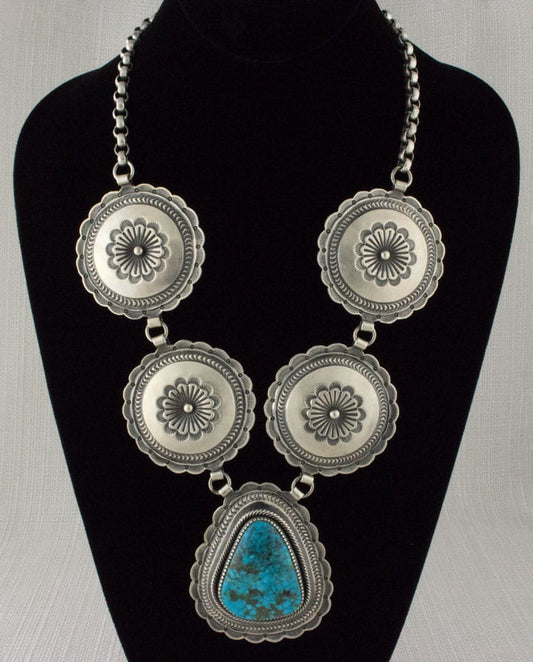
Few forms in Native American jewelry carry the visual weight and historical depth of the concho. Shaped from heavy-gauge sterling silver and often set with natural turquoise, these pieces have been made by Navajo jewelers since the late 1860s, each one bearing the mark of the artist's hand in every stamped border and raised curve. SilverTQ has spent more than 45 years building direct relationships with reputable Native American artists across the Southwest, and this collection reflects that commitment: authentic, handmade concho necklaces selected for their quality, artistry, and enduring appeal.
Explore Our Collection of Concho Necklaces
Concho necklaces honor Native American artistry with sterling silver medallions shaped into graceful, shell-like forms and, in many pieces, set with natural turquoise. Bold stamp patterns, dimensional repoussé, and heavy-gauge sterling silver that sits balanced and confident at the neckline are hallmarks of the collection. Those who prefer a more understated look will find concho pendants sized for daily wear, while those drawn to bolder statements will find pieces with the presence to anchor a special occasion. For a broader view across designs, the full selection of necklaces offers options to build a cohesive look.
The History and Cultural Significance of the Concho
The word concho comes from the Spanish concha, or shell — a reference to the domed, shell-like shape of early silver ornaments. In the late 1860s, Navajo jewelers hammered Mexican silver pesos into round or oval plates with scalloped edges and exacting stamp patterns. These First Phase conchos often featured diamond-shaped piercings and a central bar that allowed a leather strap to pass through, appearing on bridles, saddles, and especially concho belts. As soldering techniques spread in the 1880s during the Second Phase, loops were added to the back, freeing the entire front for detailed decoration. By the early 1900s, the Third Phase saw turquoise settings, butterfly spacers, and repoussé become common, and the concho form expanded from belts into necklaces, cuffs, earrings, and other jewelry.
What the Concho Represents
Concho adornments have long signified standing and pride. Historically, the amount of silver and the complexity of a belt or necklace communicated wealth and social position within a community. Stamped motifs on sterling silver often reference nature, protection, and identity.
Families passed concho jewelry down as heirlooms, connecting generations through shared designs and methods. Because many artists fashioned their own stamps, the pattern language on a piece functions as a quiet signature that reflects the hand and perspective of its maker.
Traditional Silversmithing Techniques in Concho Necklaces
Traditional silversmithing techniques used in crafting concho necklaces include hand-hammering, repoussé and chasing, stamp work, and bezeled stone setting. These core methods shape sterling silver or coin silver into the iconic domed, scalloped discs characteristic of Southwestern jewelry
Hand-Stamping and Repoussé
Hand-stamping builds borders, radiating lines, and geometric motifs by striking sterling silver with custom punches. Artists make and tune these punches themselves, so their patterns often carry personal character and precise alignment. Repoussé raises sculptural forms by hammering from the reverse, giving a concho its dimensional profile and lively shadows. Many concho necklaces are made from heavy-gauge sterling silver, which adds strength, satisfying weight, and a smooth finish that signals meticulous handmade jewelry.
Stone Setting and Bezels
When natural stones are part of the design, jewelers typically use hand-cut bezels — a thin strip of sterling silver formed around a cabochon to secure it. This approach protects the stone's edge and integrates the gemstone into the silver without visual bulk. Many concho pieces also use appliqué, where additional silver elements are soldered onto the face to introduce layers and depth. Together, these methods define the refined character of an authentic turquoise concho necklace and reflect traditional Navajo jewelry techniques.
The Turquoise in Concho Necklaces
Turquoise has a longstanding place in Native American jewelry, appreciated for its color and connection to the Southwestern landscape. In concho necklaces, it offers contrast that complements deep stamping and sculpted silver. The collection often includes several varieties, each with distinct visual qualities worth noting before making a selection. Premium turquoise jewelry from the Southwest tends to draw from the same regional mines that have supplied Navajo jewelers for generations.
- Kingman Turquoise: Vivid sky-blue that ranges from bright to deeper tones, often with a black or brown matrix. A classic choice that stands out against sterling silver and suits statement concho pendants.
- Birdseye Kingman Turquoise: Sky-blue with small, rounded matrix groupings that resemble a bird's eye. Distinctive and collectible, it introduces intricate visual texture.
- Sonoran Gold Turquoise: Warm green to aqua hues with a golden to brown matrix. Earthy and eye-catching, it pairs well with traditional Navajo stamp patterns.
- Golden Hill Turquoise: Soft periwinkle to lavender-blue with a light brown or spider web matrix. Understated and elegant, it lets the silver remain the visual anchor.
Some concho necklaces may also incorporate red coral for high-contrast color and a classic Southwestern palette. In other designs, spiny oyster shell or onyx may appear to create contrast and balance.
The Artists Behind Concho Necklaces
SilverTQ’s collection is built around direct relationships with accomplished Native American artists, ensuring every concho necklace reflects skilled technique, tradition, and careful material selection. While forms and motifs vary, the work consistently emphasizes precise stamping, dimensional repoussé, hand-cut bezels, and heavy-gauge sterling silver; all the qualities experienced jewelry lovers seek in authentic concho pieces.
Navajo Silversmithing Excellence
Many concho necklaces in the collection are made by Navajo jewelers who continue methods passed down through generations. Their work often features deep, rhythmic stamping, elegantly domed profiles, and thoughtful stone choices. Heavy-gauge sterling silver provides a confident feel, and well-fitted bezels present natural turquoise without overwhelming the design. The result honors heritage while expressing each artist's individual voice.
How to Style a Concho Necklace
A concho necklace brings character to both casual and dress attire. For saturated color, pairing a Kingman turquoise concho with neutral clothing or an open neckline lets the pendant draw the eye naturally. To build a cohesive Southwestern look, matching a sterling silver concho pendant with overlay bracelets or sterling silver earrings ties the ensemble together. For everyday wear, a smaller concho pendant on a shorter chain keeps the profile refined and comfortable throughout the day. The full necklace collection offers complementary pieces that work well together.
Caring for Your Concho Necklace
To keep sterling silver luminous, use a quality silver polish or a dry polishing cloth. After wearing, gently wipe turquoise and other natural stones with a soft, dry cloth to remove oils and dust. Harsh chemicals, ammonia, and ultrasonic cleaners can harm both the silver and the stones and should be avoided entirely. Store each necklace in a soft pouch or a lined jewelry box, kept separate from other pieces to prevent scratches and away from excessive humidity.
Frequently Asked Questions About Concho Necklaces
What is a concho necklace?
A concho necklace features one or more concho-style ornaments — round or oval sterling silver discs with domed profiles, traditional stamp patterns, and often repoussé — worn as a pendant or linked along a chain. The design has deep roots in Native American silversmithing, especially among Navajo jewelers, and every authentic example is handmade by a reputable Native American artist.
How can I tell if a concho necklace is authentic Native American jewelry?
Authentic pieces are handmade by reputable Native American artists, often Navajo, Zuni, Hopi, or Kewa Pueblo jewelers. Most include an artist's hallmark (initials or name) and a sterling quality stamp on the back of the silver; gold elements are stamped accordingly, such as 14K or 18K. Warning signs for mass-produced counterfeits include pieces that feel too lightweight or stamping that looks overly uniform and laser-etched. SilverTQ guarantees the authenticity of every piece in its collection.
What materials are used in Native American concho necklaces?
Most concho necklaces are made from sterling silver and natural stones. Turquoise (often Kingman, Birdseye Kingman, or Sonoran Gold) is most common, though some pieces include red coral, spiny oyster shell, or onyx. Certain jewelers may also incorporate 14K or 18K gold accents to emphasize key design elements.
Does SilverTQ offer free shipping and returns?
Free U.S. shipping is included on every order, sent via USPS Ground Advantage or UPS Ground, fully insured and trackable. Faster options, including USPS Priority Mail Express and UPS Next Day Air, are available at an additional charge. International orders ship via UPS Worldwide Expedited and typically arrive within two to five business days. For returns, items may be sent back within 14 days of receipt for a full refund (PayPal purchases are subject to a deduction of approximately 5% to cover the non-recoverable seller transaction fee). Items returned between 15 and 30 days are eligible for full store credit toward a purchase of equal or greater value. Returns are not accepted after 30 days. Items must be in their original, unaltered condition, and customers are responsible for return shipping costs. There are no restocking fees.
Explore concho pendants, browse Navajo jewelry, or discover the full turquoise jewelry collection to find pieces that feel personal and enduring.