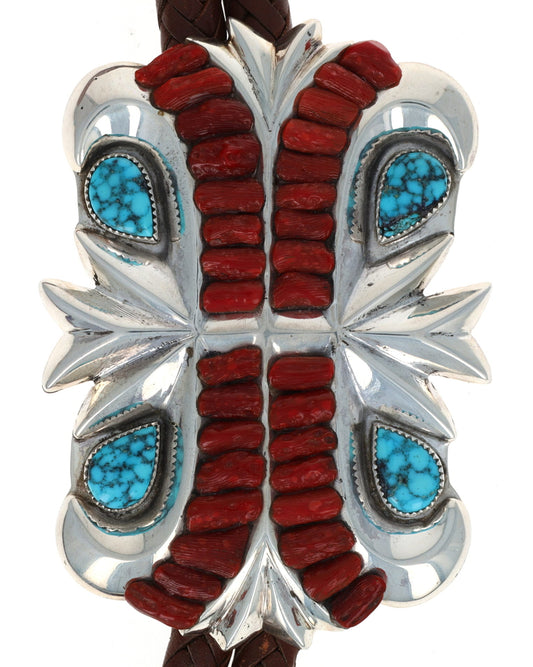
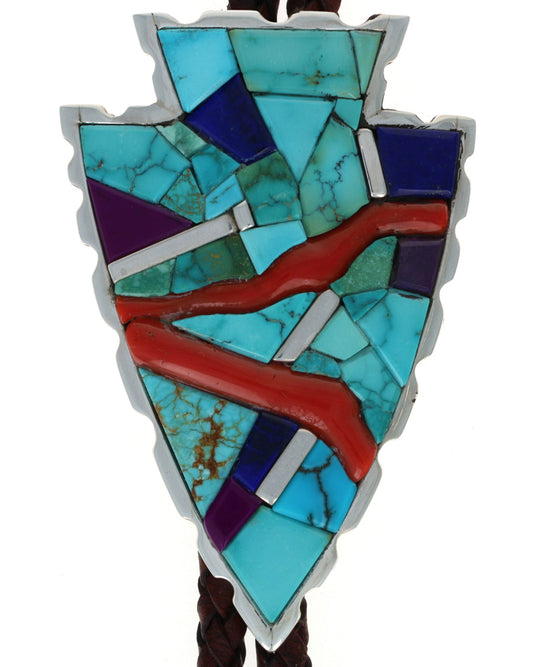
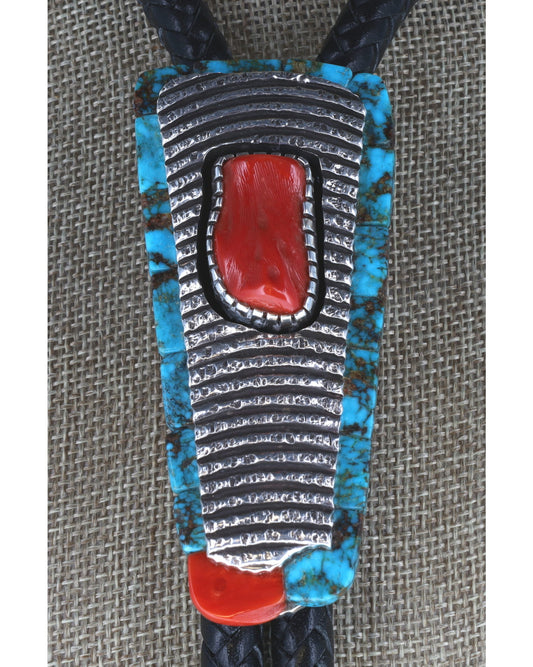
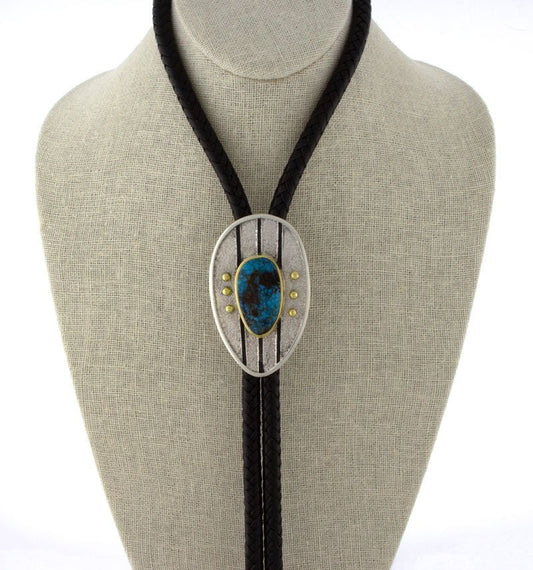
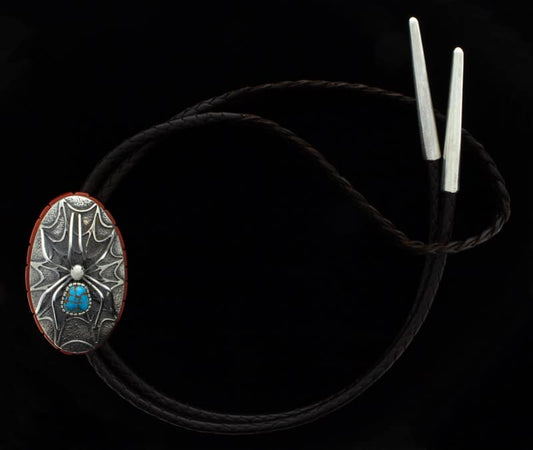
Few materials command attention quite like Mediterranean coral set against heavy-gauge sterling silver. The collection of authentic Native American coral bolo ties brings that contrast into sharp focus. Each piece pairs the deep, saturated red of natural coral with the cool weight of sterling silver, handmade by reputable artists from the Navajo, Zuni, Hopi, and Kewa Pueblo traditions. The artistry behind these bolo ties reflects generations of technique and cultural pride, producing jewelry that carries serious visual presence alongside historical depth.
SilverTQ has spent over 45 years building direct relationships within the Native American jewelry community. That long-standing experience gives jewelry enthusiasts a trusted source for authentic, high-quality bolo ties.
The Significance of Coral in Native American Jewelry
Spanish traders introduced Mediterranean blood coral to Southwest Native Americans roughly 600 years ago, and the impact was immediate. Before coral arrived, argillite served as the primary red accent material in jewelry and adornment. The vivid red of blood coral made argillite obsolete almost overnight. Red holds deep symbolic importance in Native American culture, representing energy, power, and life.
All four major jewelry-making traditions incorporate coral into their work, though each approaches the material differently. The Zuni hold a particular reverence for the color red, believing that coral brings good luck and longevity to the wearer. Navajo jewelers have long paired coral with turquoise in a combination widely understood to symbolize the union of earth and water. Hopi and Kewa Pueblo artists also use coral to add vibrant contrast to their distinctive silverwork. Coral was first set in silver in the late 19th century, shortly after the Navajo, Zuni, and Kewa Pueblo peoples mastered silversmithing techniques.
Distinctive Styles and Techniques
The collection spans several distinct silversmithing traditions, each bringing a different visual character to the use of coral. The table below outlines the key techniques represented, the tribal affiliation associated with them, and the specific qualities to look for in each piece.
Stamp Work and Repoussé
- Tribal Affiliation: Navajo
- What to Look For: Rhythmic hammered patterns in heavy-gauge sterling silver, often framing coral and turquoise cabochons in handmade bezels. Gold pieces may also feature detailed stamp work.
Tufa Casting
- Tribal Affiliation: Navajo
- What to Look For: A distinctive pebbled texture on the silver surface, produced by pouring molten metal into a hand-carved volcanic tufa stone mold. Each mold typically yields only one or two pieces.
Stone-on-Stone Inlay
- Tribal Affiliation: Zuni
- What to Look For: Coral precisely cut and set flush alongside turquoise, jet, and mother of pearl in a continuous mosaic, admired for its accuracy and color harmony.
Overlay
- Tribal Affiliation: Hopi
- What to Look For: Cut-out motifs soldered onto a darkened silver base to create crisp, high-contrast silhouettes, occasionally accented with coral.
Mosaic Inlay
- Tribal Affiliation: Kewa Pueblo
- What to Look For: Vibrant geometric designs built from coral and other natural materials set into a silver base.
Featured Artists in the Coral Bolo Tie Collection
Renowned Navajo artist Alvin Yellowhorse is among the most accomplished silversmiths in the collection. His work is defined by a distinctive fusion of traditional Navajo tufa casting and intricate multi-stone inlay in a combination that produces pieces with significant visual weight. His bolo ties typically feature a shadowbox construction with coral and turquoise, a format that allows both the depth of the casting and the richness of the stone combination to be read clearly.
The collection also includes work by two other notable Navajo artists: Vernon Haskie and Philander Begay. Vernon Haskie is recognized for pairing high-grade natural turquoise with coral inlay in heavy-gauge sterling silver, producing designs that are elegant and precise. Philander Begay brings a different sensibility to the form, with tufa cast bolo ties that often feature multi-stone raised cobblestone inlay designs. Each artist brings a high level of technique to their work, reflecting the finest traditions of Navajo silversmithing.
How to Style a Coral Bolo Tie
A coral bolo tie functions as a striking focal point for both men and women, offering versatility across formal and casual wardrobes. The deep red of the coral draws the eye naturally and complements a wide range of colors and fabrics.
For men, wearing the slide high at the collar with a crisp button-up shirt creates a polished, intentional look suited to formal occasions. Dropping the slide to the upper chest with a denim jacket or Western snap shirt delivers a smart-casual aesthetic rooted in Southwestern style. The rich color of the coral pairs exceptionally well with navy, charcoal, and earth tones.
For women, the bolo tie functions as sculptural jewelry. Worn at a V-neckline or over a silk dress, the coral slide becomes a focal point in its own right. It pairs beautifully with Navajo Pearl necklaces for a layered Southwestern look, or it can stand alone as the statement piece against a simple blouse.
Caring for Your Sterling Silver and Coral Bolo Tie
With proper care, a sterling silver and coral bolo tie will remain a cherished piece for years. The sterling silver slide and tips should be cleaned using silver polish to maintain their luster and prevent tarnish from building up.
Natural coral requires a bit more attention. Harsh chemicals, oils, and excessive moisture can dull the stone's surface over time, so keep the bolo tie away from perfumes, lotions, and water. Storing the piece hanging or laid flat protects the braided leather cord and prevents unnecessary stress on the tension clasp.
Why Choose SilverTQ for Your Native American Jewelry
SilverTQ's collection reflects over 45 years of direct relationships with reputable Native American artists. That depth of experience means every piece is selected with a knowledgeable eye; not sourced from a catalog, but chosen because it represents the best of what each artist produces. The result is a curated selection of premium, handmade jewelry that jewelry enthusiasts can trust.
The collection also offers exceptional value. Periodic sales and free U.S. shipping make it possible to acquire premium art at accessible prices. Whether you’re a seasoned jewelry enthusiast or exploring authentic Native American jewelry for the first time, this collection is worth a close look.
Frequently Asked Questions
How can I tell if a coral bolo tie is authentic Native American jewelry?
Look for the artist's hallmark or signature stamped on the back of the slide. Genuine pieces are handmade with natural materials such as sterling silver and authentic coral, and they carry the weight and slight irregularities that distinguish handmade artistry from mass-produced items. Signs of a mass-produced counterfeit include a piece that feels too lightweight or has stamping that looks too uniform and appears laser-etched rather than hand-struck. Purchasing from a reputable source with decades of industry experience is the most reliable way to ensure authenticity.
What is the difference between Mediterranean blood coral and bamboo coral in jewelry?
Mediterranean blood coral is a naturally deep red coral historically prized in Native American jewelry for its rich color and rarity. Much of the Mediterranean blood coral on the market today was collected prior to World War II, making it increasingly scarce and valuable. Bamboo coral is a less-valued species that is typically dyed red to imitate the appearance of Mediterranean coral. High-end pieces feature natural, undyed coral, which commands a higher price because of its scarcity.
How do I adjust the slide on a bolo tie without damaging the leather cord?
Press the tension clasp on the back of the slide fully to release its grip on the cord, then move the slide to the desired height before releasing the clasp. Avoid forcing the slide while the clasp is engaged, as this can fray the braided leather over time. For formal occasions, wear the slide high at the collar; for a more relaxed look, drop it to the upper chest.
Can coral bolo ties be worn by women?
Coral bolo ties are a versatile accessory for both men and women. Women often wear the slide lower on the sternum as a statement pendant, layered with Navajo Pearl necklaces or worn against a silk dress for a refined Southwestern aesthetic. The deep red of coral pairs well with a wide range of colors and fabrics.