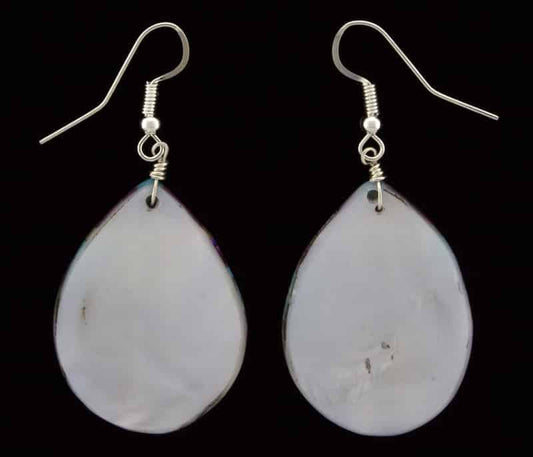
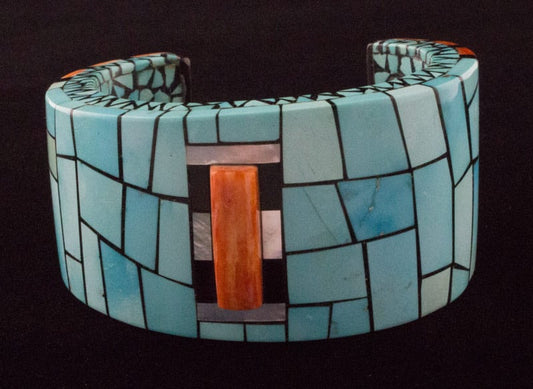
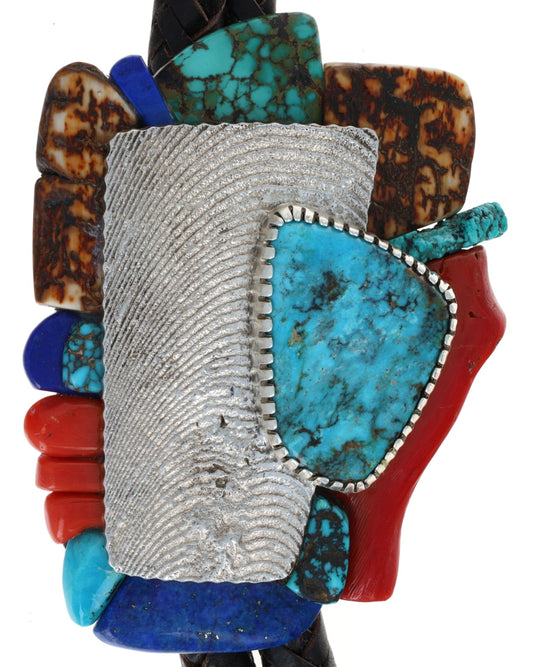
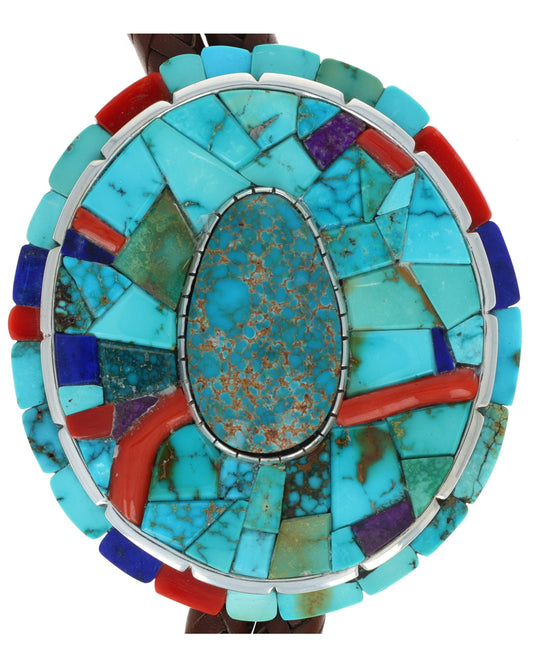
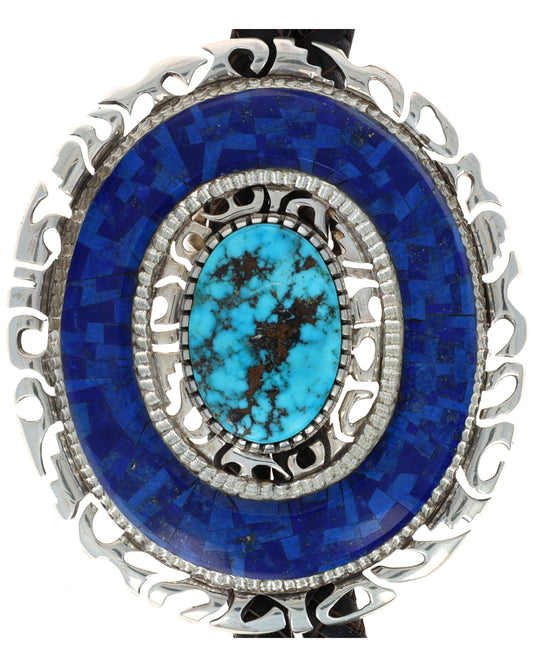
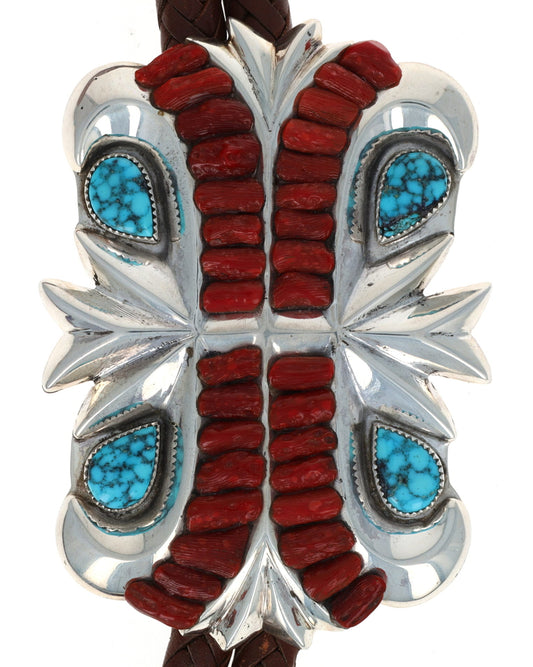
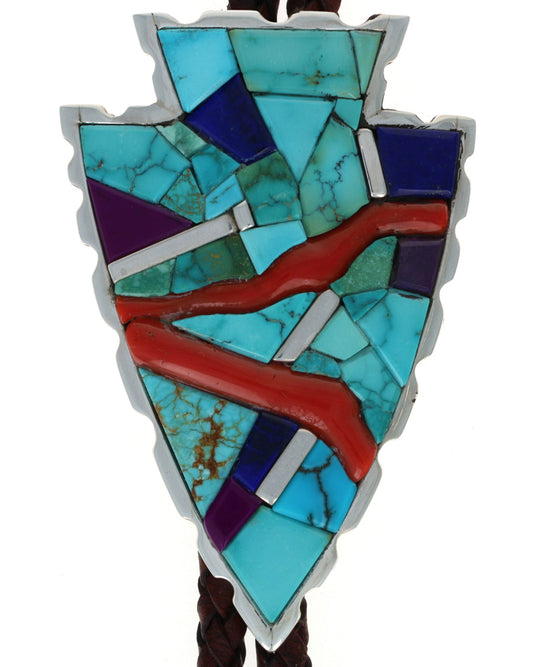
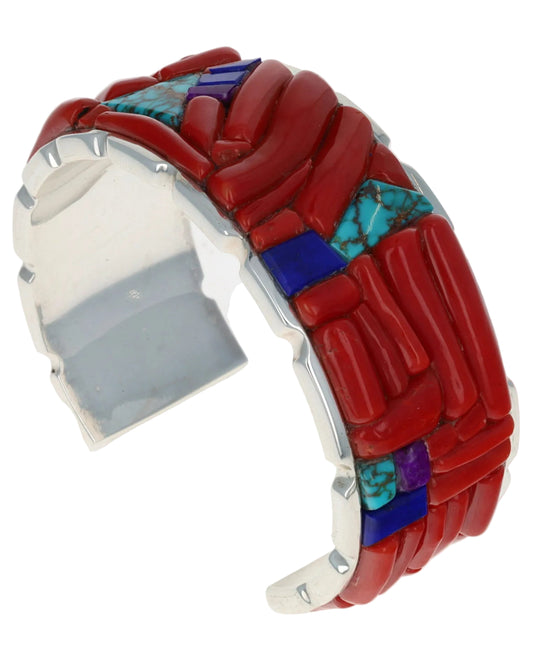
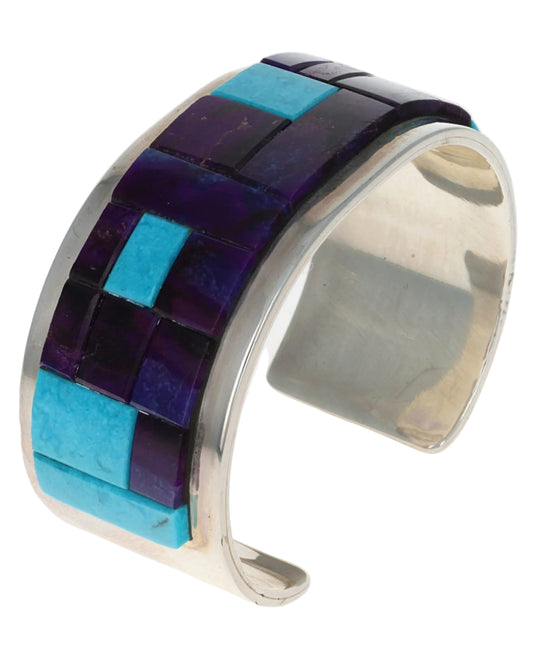
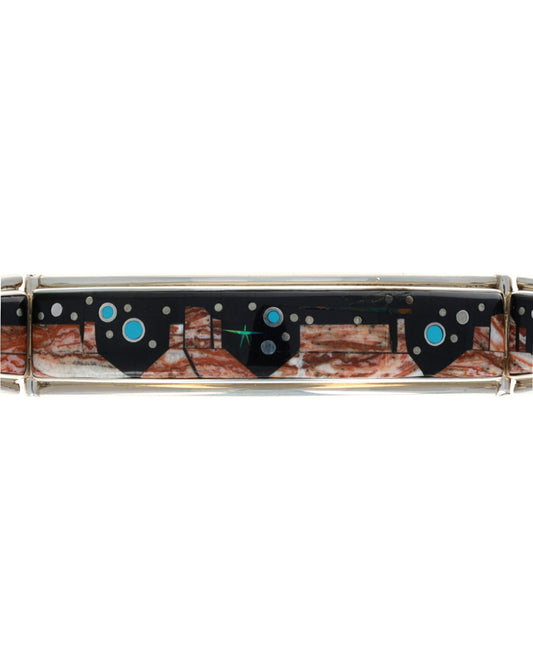
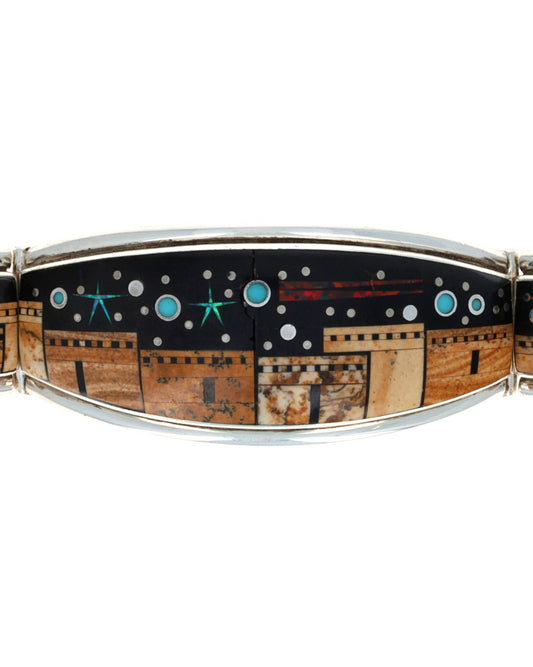
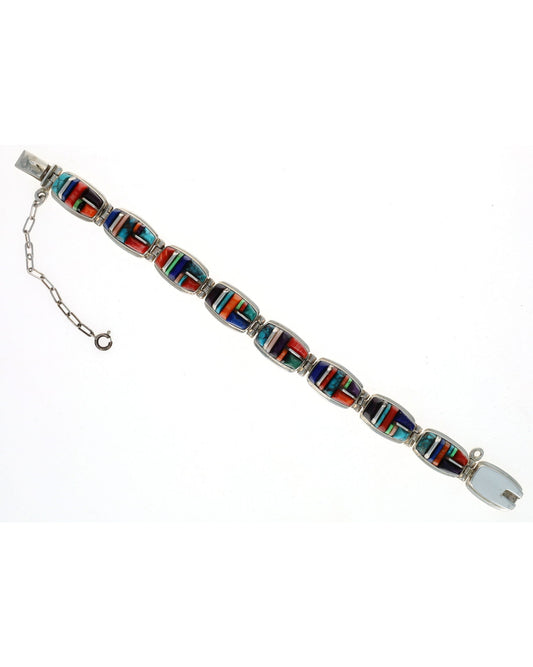
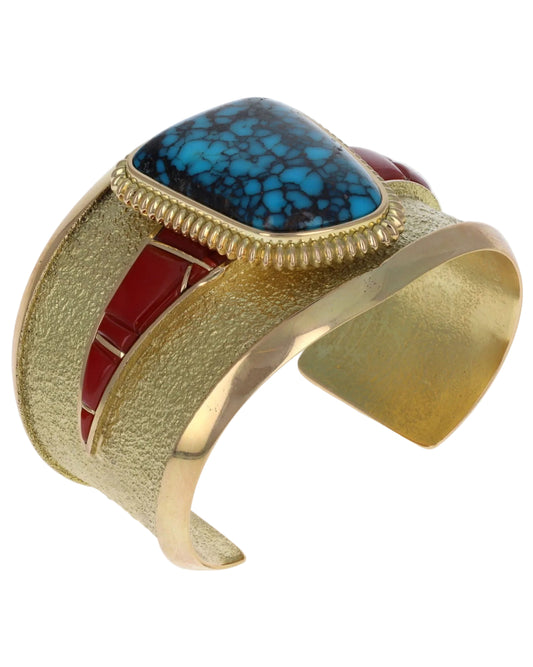
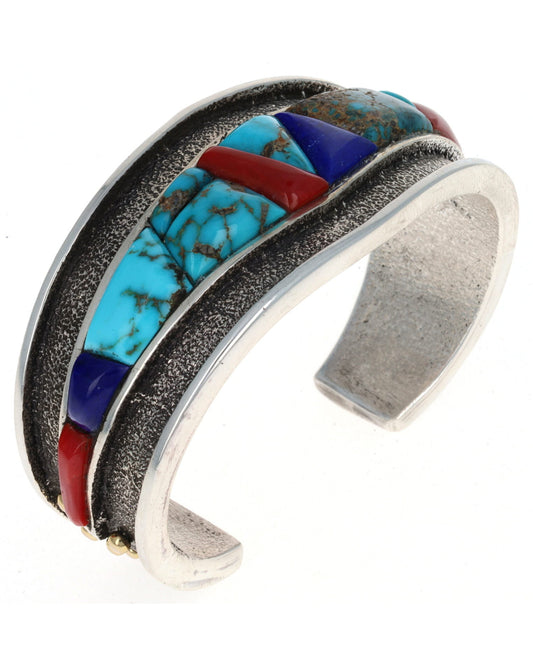
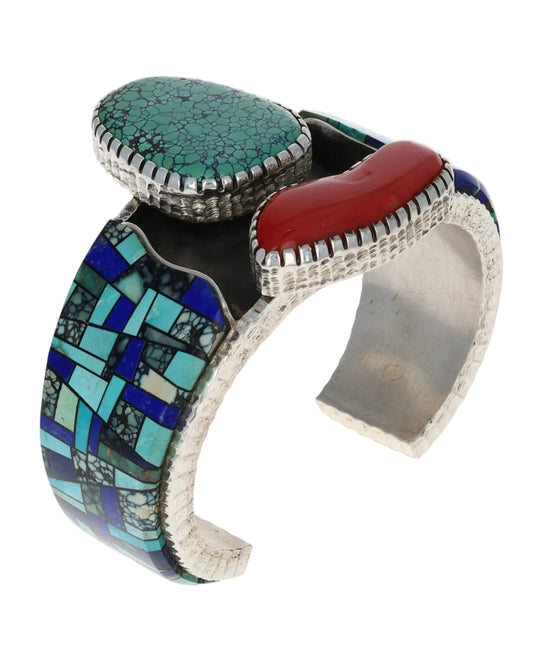
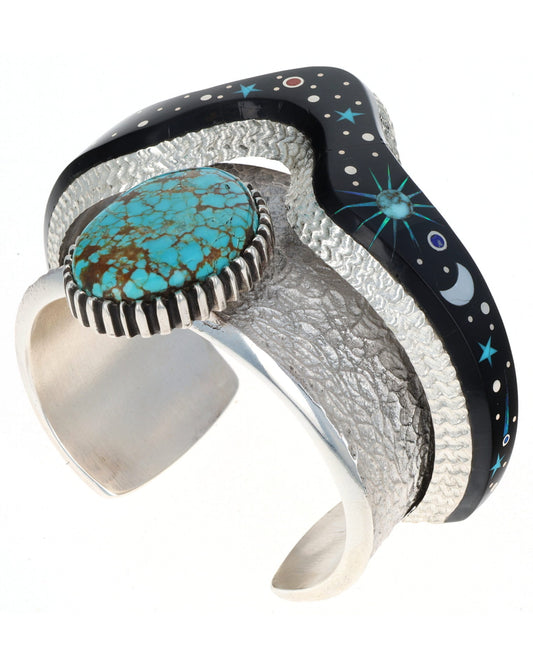
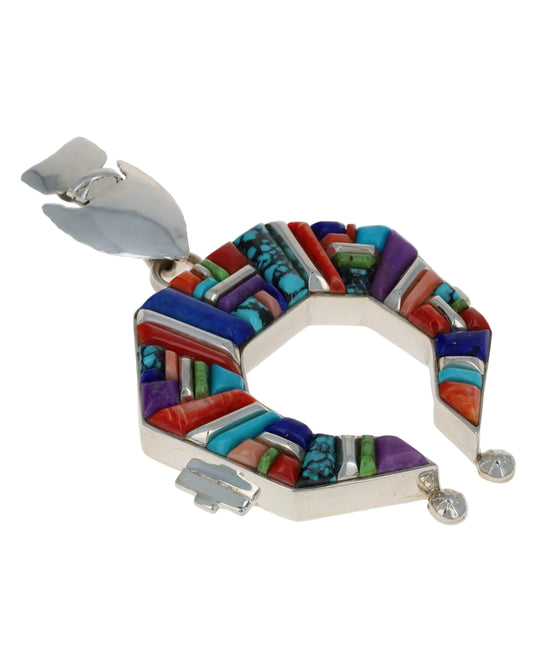
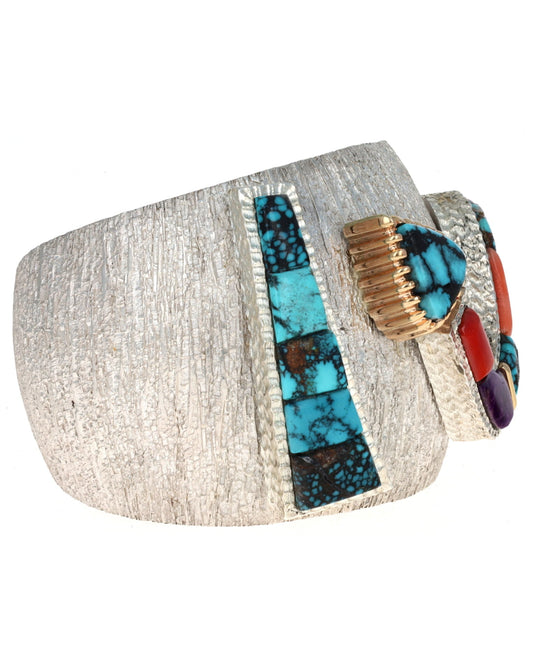
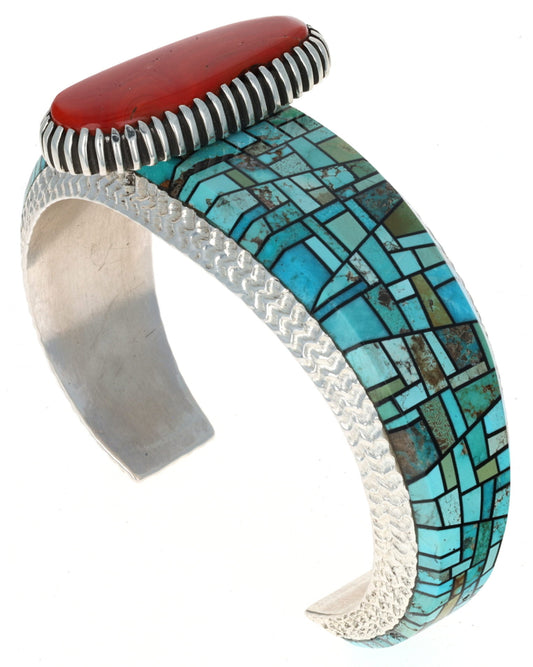
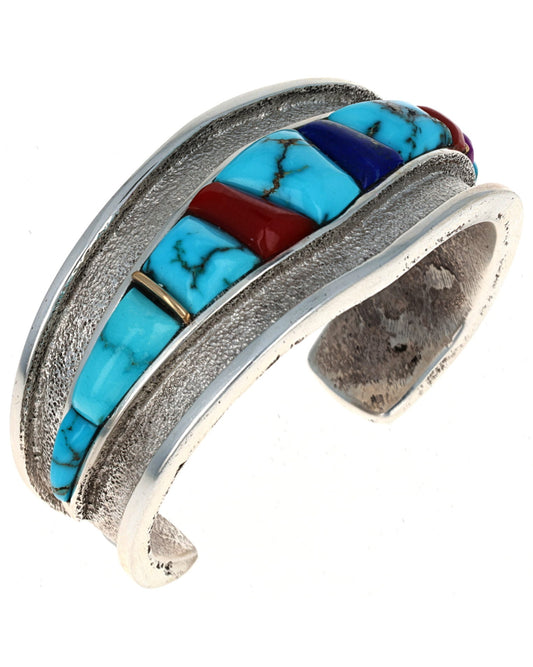
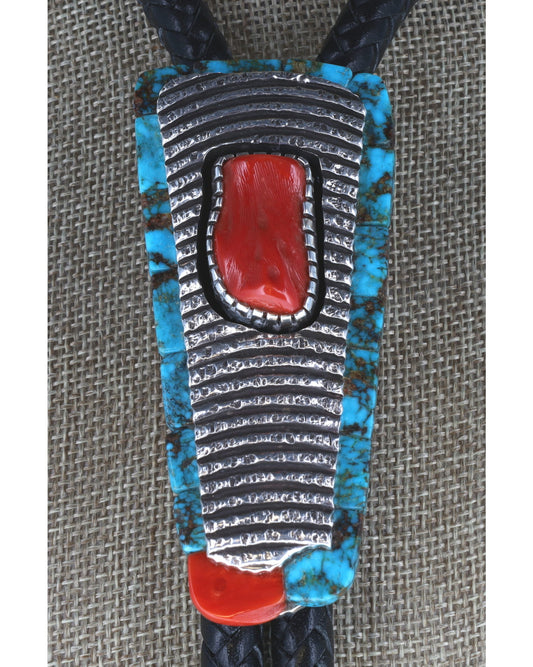
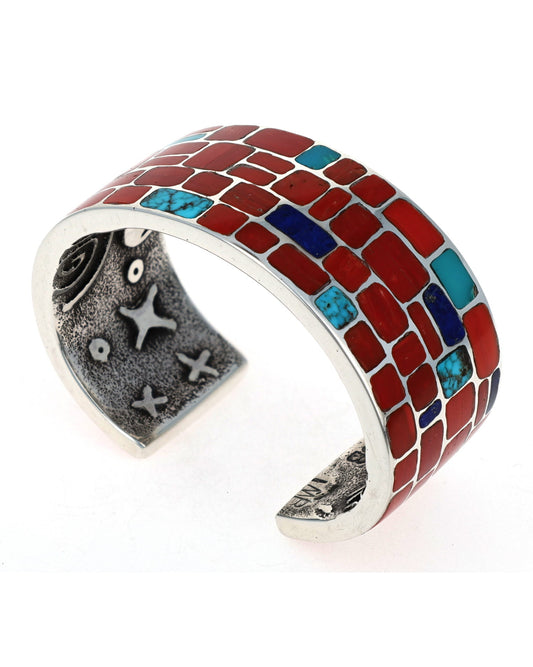
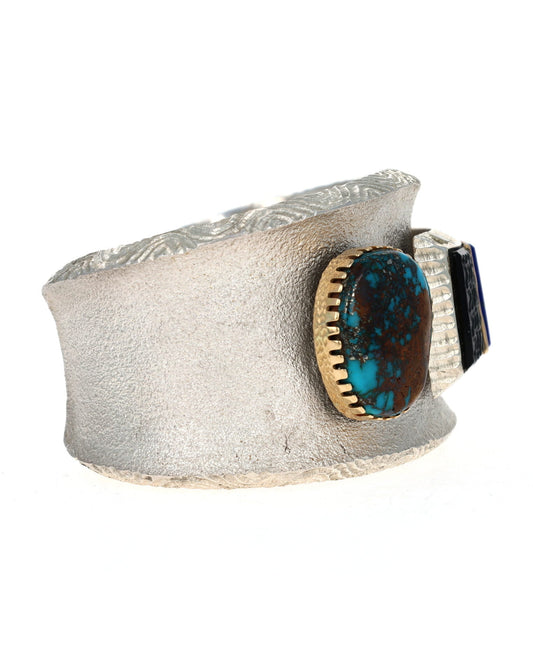
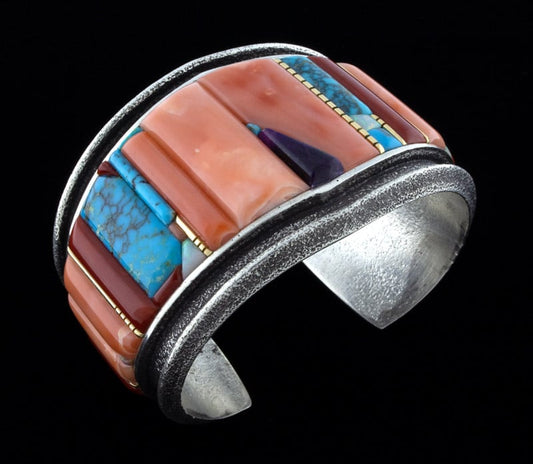
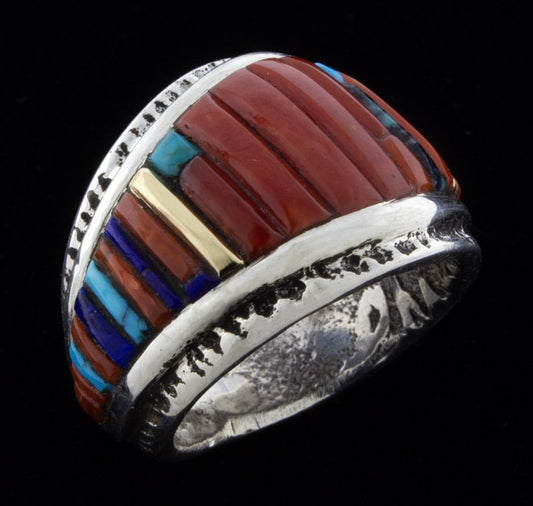
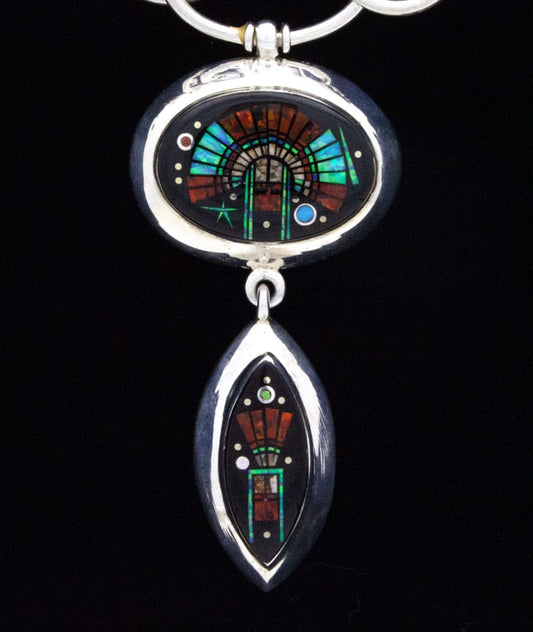
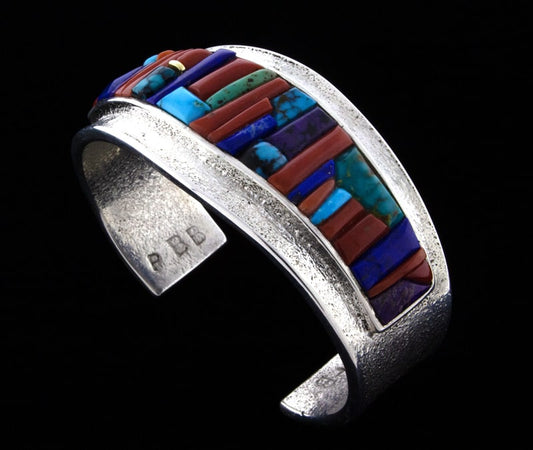
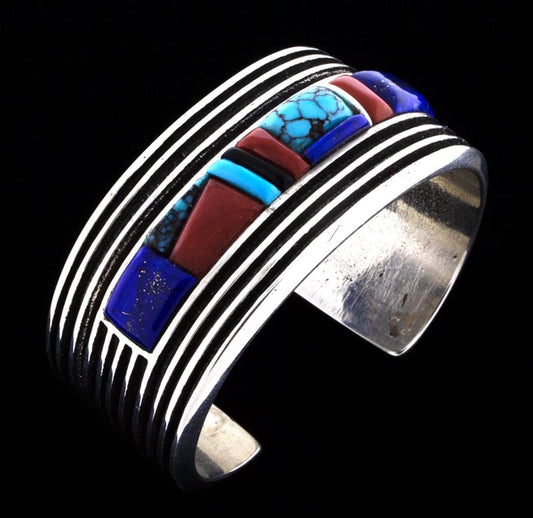
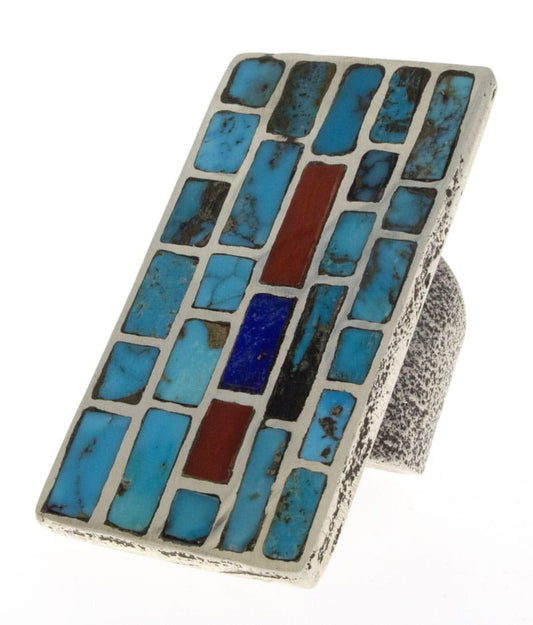
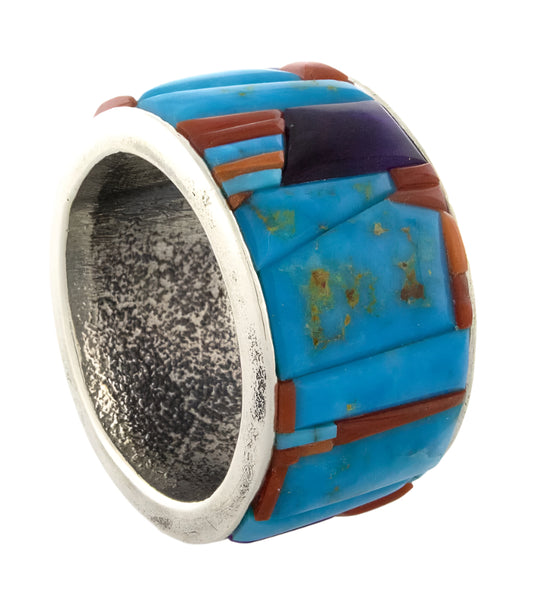
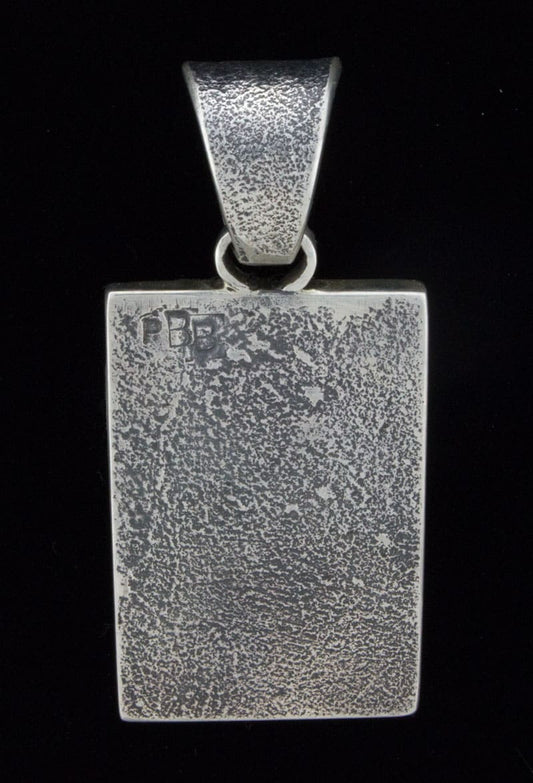
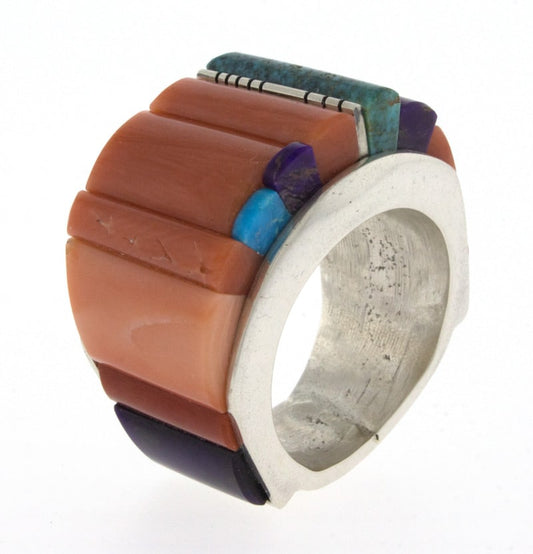
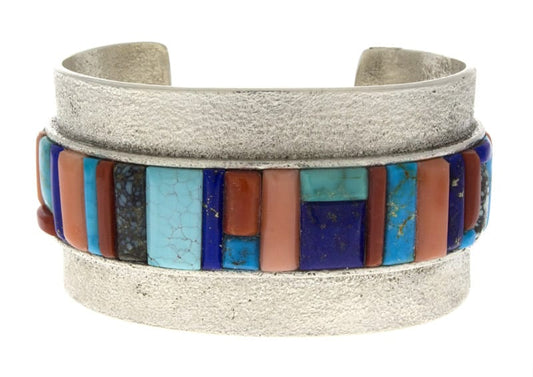
Inlay work sets stone flush against metal, cut and fitted piece by piece until the surface reads as one smooth plane. This collection includes channel and mosaic inlay from Zuni artists alongside raised cobblestone inlay from Navajo artists working in tufa cast. Kewa Pueblo artists also contribute stone-on-stone mosaic work. The collection includes bracelets, rings, bolo ties, necklaces, earrings, and pendants, each handmade by reputable Native American artists and hand-selected for the collection.
What Is Inlay Jewelry
Inlay is one of a few ways a stone gets set into metal, and it helps to know what separates this technique from the alternatives before shopping the collection.
How Inlay Differs From a Bezel or Prong Setting
A bezel wraps a rim of metal around a stone and holds it above the surface. Inlay works the opposite way: an artist carves a recess into the metal, cuts a stone to match that shape, and sets it flush with the surrounding surface. Run a finger across a well-made inlay piece and you’ll feel no ridge where metal meets stone, just one continuous plane.
Inlay Versus Overlay
Overlay looks different once you know what to look for. For this technique, an artist cuts a pattern out of one sheet of silver, then solders it onto a second, oxidized sheet below, so the design sits raised above the surface in relief. Overlay work is traditionally associated with Hopi artists, so the work presented here is largely Navajo or Zuni-made.
The Artistry Behind Inlay Jewelry
Inlay jewelry holds a vibrant and highly respected place in modern Native American art, balancing centuries-old lapidary traditions with contemporary fine-art markets.
Origins in Stone and Shell
Long before silversmithing reached the Southwest, artists were already setting stone into shell. Native American inlay work, particularly from Zuni and Navajo artists, grew out of that traditional technique of fitting turquoise, coral, and other stones into symbolic patterns. Once silversmithing took hold in the region in the early twentieth century, those same lapidary skills moved to metal, and the inlay style familiar today took shape.
Zuni, Navajo, and Kewa Pueblo Contributions
Zuni artists continue to carry forward the channel and mosaic tradition most associated with early inlay work. Kewa Pueblo artists in the collection create stone-on-stone and mosaic pieces with deep roots in shell inlay. Navajo artists such as Philander Begay make their mark on the bracelet and ring selection with raised cobblestone inlay built through tufa casting.
Types of Inlay Techniques
The inlay pieces in this collection fall into a few recognizable styles, distinguished mainly by how the stones are cut and set against the metal.
- Channel inlay: Stones are cut to fit into compartments built from silver or gold, with a thin wall of metal separating each piece, historically a Zuni specialty.
- Mosaic inlay: Also called stone-on-stone inlay, this style sets stones directly against one another with no metal between them, and the mosaic bracelets in this collection are made by Kewa Pueblo artists.
- Raised cobblestone inlay: A mosaic variation with an uneven, tactile surface, often built and integrated with Navajo tufa casting or ingot sterling silver.
- Micro inlay: Very small, densely set stones used to render detailed scenes, including petroglyph figures and Monument Valley imagery, found on many of the bracelets and pendants in the current selection.
Materials and Stones in This Collection
A single inlay piece often combines multiple stones, chosen for hardness and color as much as meaning.
- Turquoise: Color and matrix vary by mine, and stones from Kingman, Royston, Candelaria, Morenci and Lone Mountain all appear across current inventory.
- Coral: A vibrant red that quickly surpassed duller red stones, such as argillite, that were used before trade brought coral to the Southwest.
- Jet, mother-of-pearl, and shell: Common choices for contrast against turquoise and coral in multi-stone pieces.
- Sugilite, lapis lazuli, spiny oyster, and opal: Used to add color variation, particularly in cobblestone and mosaic work.
- 18K gold: Appears as an accent metal on select bracelets, and gold pieces carry the same stamps and hallmarks as sterling silver work.
Shop Inlay Jewelry by Category
Every inlay technique in this collection turns up across a range of jewelry types.
- Inlay bracelets: cuffs and link styles in channel, mosaic and cobblestone work.
- Inlay rings: from delicate stacking bands to bold cobblestone statement pieces.
- Inlay necklaces: including pendant necklaces and multi-strand designs.
- Inlay earrings: post, dangle, and hoop styles set with stone inlay.
- Inlay bolo ties: a signature Southwest accessory available in high-grade turquoise inlay.
- Inlay pendants and pins: standalone pieces for layering or gifting.
- Inlay belt buckles and concho belts: statement pieces for a full look.
Notable Inlay Artists in This Collection
A handful of artists account for much of the inlay work currently in stock.
- Alvin Yellowhorse (Navajo): developed a corn row inlay style in which each stone is individually cut and rounded before setting, drawing inspiration from petroglyphs near his workshop.
- Isiah M. Begay (Navajo): works primarily in tufa-cast bracelets, pendants, and rings with exceptional stone-on-stone inlay, sometimes in 18K gold, continuing a tradition his father Philander Begay helped establish.
- Philander Begay (Navajo): a tufa-casting specialist known for one-shot mold work depicting Pueblo scenes and traditional symbols.
- Daniel Coriz (Kewa Pueblo): trained by his mother and grandfather, known for mosaic inlay pendants and multi-strand heishi necklaces in turquoise and spiny oyster.
- Kenneth Bitsie (Navajo): creates contemporary channel and mosaic inlay pieces, often in lapis lazuli, opal, and turquoise combinations.
- Cecil Ashley (Navajo): known for mosaic inlay set in asymmetrical patterns using spiny oyster, onyx, lapis lazuli, and opal.
- Vernon Haskie (Navajo): works across overlay and inlay techniques, recognized for mosaic and channel work in coral, turquoise, and lapis lazuli.
Choosing the Right Piece
A few practical questions come up often when shopping for inlay jewelry, starting with budget and fit.
Price Range and Occasion
Inlay pieces in this collection range from under two hundred dollars to museum-grade work well into five figures, depending on the artist, stone grade, and design complexity. Simpler handmade pendants and earrings work well as a first purchase or an everyday gift, while cobblestone bracelets and bolo ties tend to anchor a look for someone building a full Southwest wardrobe.
Getting the Right Size
For rings, a printable sizer or a quick trip to a local jeweler is the most reliable route. For bracelets, measure around the widest part of the hand that must slide through the cuff, then compare that number to the bracelet's total inside measurement. A comfortable cuff usually has at a full inch to an inch and a half of gap beyond that measurement. Full charts with artist-specific sizing notes are available on the sizing page.
The Indian Arts and Crafts Act
The Indian Arts and Crafts Act (IACA) makes it illegal to market a product as Indian-made when it isn't, but there are still vendors who attempt to pass off mass-marketed pieces as authentic. When choosing a piece, only patronize retailers who can guarantee their pieces are genuine, handmade Native American jewelry. SilverTQ offers a Certificate of Authenticity, giving their buyers assurance that their purchases are of authentic handmade quality by noteworthy Native American jewelry artists.
Caring for Inlay Jewelry
Keeping inlay jewelry looking its best comes down to a few simple habits. A soft silver polish cloth handles the cleaning, and it's the only method inlay jewelry needs. Because the stones sit flush against the metal, a hard knock against a countertop or car door is more likely to chip a piece than everyday wear is, so storing inlay jewelry separately from other pieces in a jewelry box helps it last.
Why Shop Inlay Jewelry at SilverTQ
SilverTQ's approach to curating inlay jewelry comes down to a simple philosophy: who makes it and what it will cost to own.
Decades of Relationships With Southwest Artists
SilverTQ's inlay selection draws on more than 45 years in the Native American jewelry trade, built through relationships with Zuni, Navajo, Hopi, and Kewa Pueblo artists that go back to the company's founding as KESA Wholesale in 1978. That history is what allows the collection to include work from established award-winning artists like Alvin Yellowhorse as well as other renowned Native American artists earlier in their career.
Value Without Compromise
Every piece in this collection is handmade by a reputable Native American artist, never mass-produced. Periodic sitewide sales combined with free U.S. shipping, make it possible to own museum-quality inlay work without paying gallery markup on top of it.
Frequently Asked Questions
What is inlay jewelry?
Inlay jewelry is made by cutting stone to fit into a recess carved or built into metal, so the stone's surface finishes flush against the metal around it.
What's the difference between inlay and overlay jewelry?
Inlay sets cut stone into a metal recess so the surface finishes flush. Overlay uses two layers of sheet silver. A design is cut from the top layer and soldered over an oxidized bottom layer, creating a raised pattern with no stone involved. Overlay is traditionally associated with Hopi artists, while inlay spans Zuni, Navajo, and Kewa Pueblo work.
Which Native American tribes make inlay jewelry?
Zuni artists are traditionally recognized for channel and mosaic inlay. Kewa Pueblo artists have deep roots in stone-on-stone and mosaic work, including shell inlay. Raised cobblestone inlay built through tufa casting is a Navajo specialty. Hopi artists work with inlay on occasion too, though they're more closely associated with overlay.
What stones and materials are used in inlay jewelry?
Turquoise and coral appear most often, along with jet, mother-of-pearl, shell, sugilite, lapis lazuli, spiny oyster, and opal. Sterling silver is the standard metal, with 18K gold showing up as an accent on select pieces.
How do I clean and care for inlay jewelry?
A soft silver polish cloth is all inlay jewelry needs for cleaning. Liquids and harsh cleaners are best avoided, and pieces should be stored separately from other jewelry since a hard knock is more likely to chip flush-set stone than normal wear is.
How do I find my ring or bracelet size?
For rings, use a printable ring sizer or have a local jeweler measure you. For bracelets, measure around the widest part of your hand and compare it to the bracelet's total inside measurement, allowing a gap of about an inch to an inch and a half for comfort. Full sizing charts, including notes on cuffs versus link styles, are available on the sizing page.
How much does handmade inlay jewelry typically cost?
Prices in this collection range from under two hundred dollars for smaller pendants and earrings to well into five figures for museum-grade bracelets and bolo ties from established artists, depending on stone grade, size, and the complexity of the inlay work.