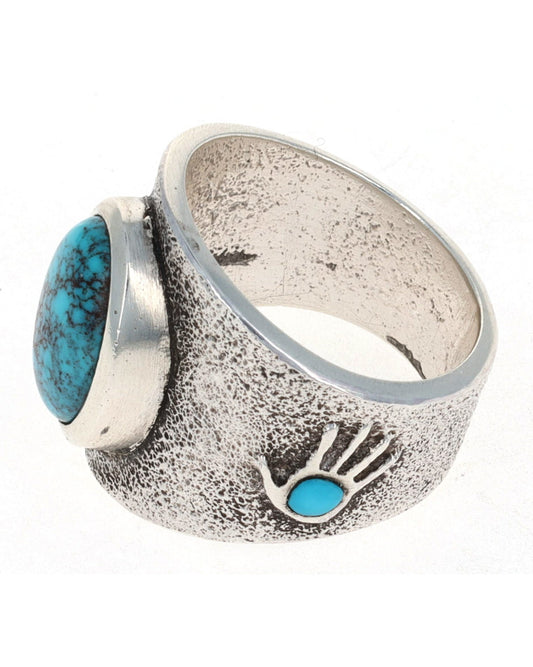
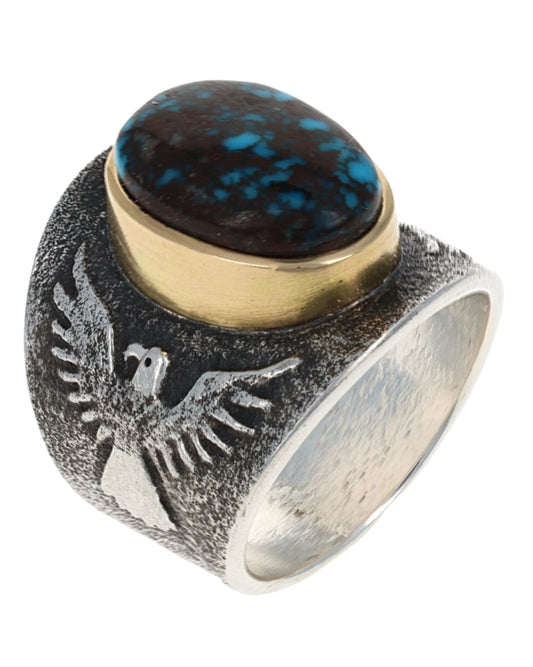
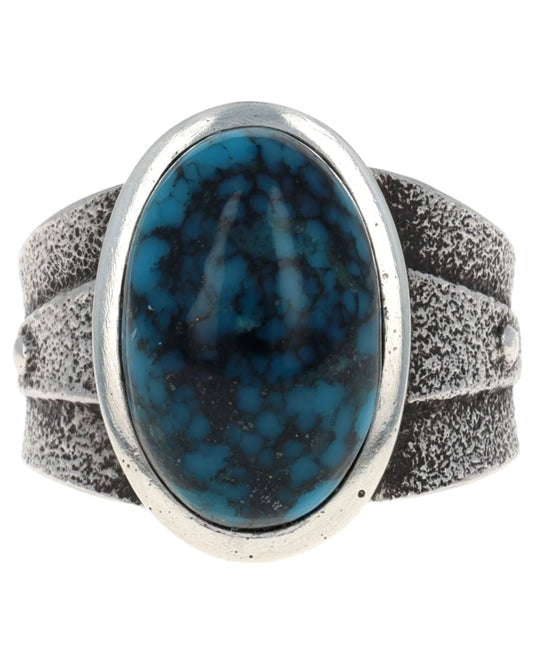
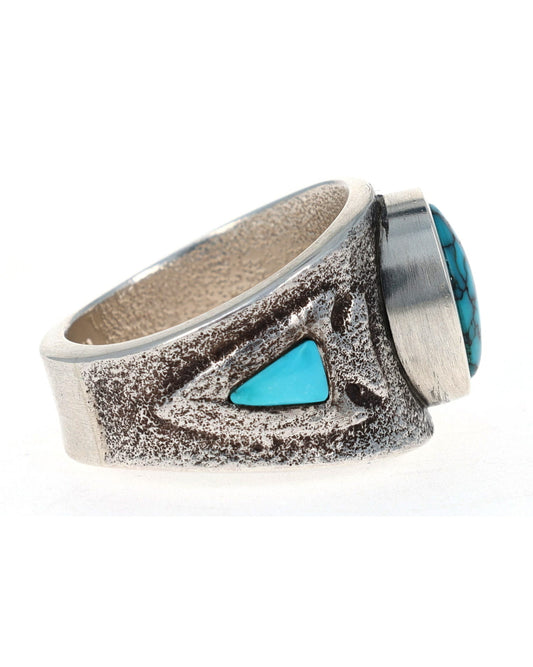
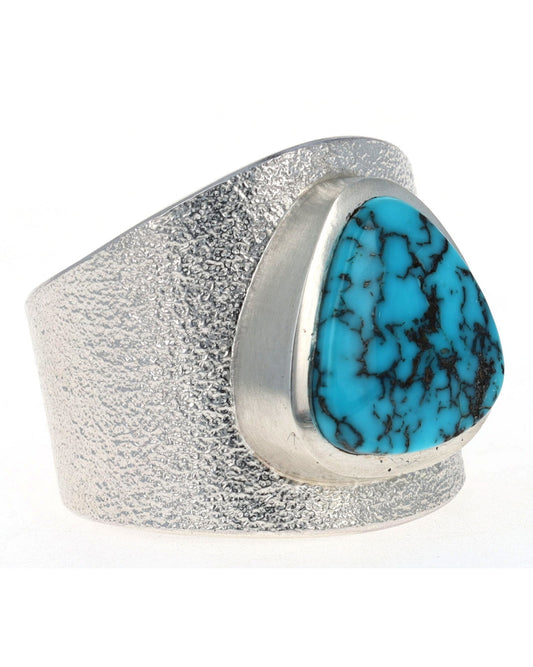
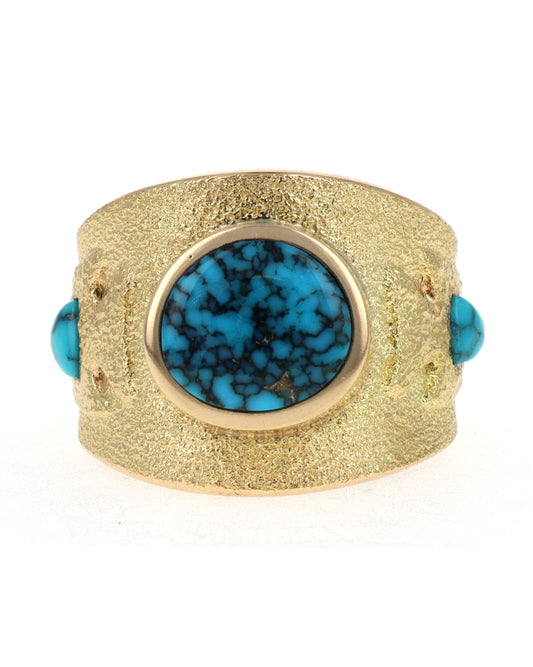
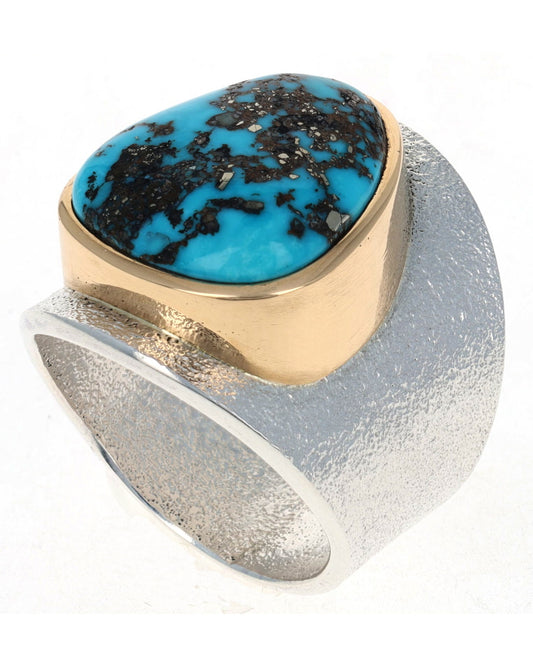
Men’s rings in Native American metalsmithing stand out for their bold use of sterling silver and eye-catching natural stones. Each style is shaped by distinct tribal traditions, including Navajo stamp work, Zuni stone inlay, and Hopi overlay. SilverTQ has an impressive collection of handmade rings, each created by respected Native American artists across a wide range of styles and stones. The handmade nature of these pieces, as well as the natural variation in stone, ensures no two pieces are exactly alike.
Understanding the Cultural and Historical Significance of Native American Rings for Men
For Native American men, the ring has always been one of the most personally and culturally loaded pieces of jewelry a person could own. Prior to the emergence of silversmithing, rings were made of wood, stone, shell, and bone and worn stacked across fingers as a reflection of identity, belief, and connection to the natural world. When Navajo metalsmiths took up silverworking in the late 1800s, the tradition took on new life, producing the bezel-set turquoise, hand-stamped silver, and repoussé work that remain the signatures of Navajo ring-making today.
Turquoise was prized as the stone of choice, long believed to bring protection and prosperity to the man who wore it. In communities without formal banking, jewelry was also the most reliable way to hold and display wealth, such that a man’s rings spoke directly to his status. Most of them were made with the intention that they would last well beyond a single lifetime, handed down through families as physical representations of spiritual meaning and cultural identity. Since the 1970s, demand for Navajo rings has climbed steadily, with silversmiths now working in silver, gold, and rare gemstones to produce pieces that collectors and enthusiasts alike treat with reverence.
Explore Native American Rings for Men
Native American rings at SilverTQ are handmade by skilled artists from tribes including Navajo, Zuni, and Hopi, with each piece rooted in generations of cultural tradition and silversmithing expertise. Worth noting is that a good portion of these rings are unisex, and many are one-of-a-kind works that artists usually do not replicate, so what you see today may not be available tomorrow.
Tufa Cast Rings
Tufa casting is a traditional Navajo technique where a design is hand-carved into soft volcanic stone, which then serves as the mold into which molten sterling silver is poured. The stone's natural porosity leaves a distinctly raw, textured surface on the metal, and because the mold is delicate, it can usually only survive a single pour.
As a result, the ring that comes out of it is rarely, if ever, made again. Rings in this category typically feature bold sterling silver designs set with high-grade turquoise, and may incorporate techniques such as inlay, appliqué, stamp work, and saw work. The rugged, earthy quality of these rings comes directly from the ancient process in a way that is genuinely one-of-a-kind.
Arrowhead Rings
The arrowhead carries profound symbolic meaning in many Native American cultures, long associated with protection, courage, and a connection to ancestral ways. Navajo artists typically bring this form to life through tufa casting, working in sterling silver and even 18K gold to produce rings with real handmade character. These pieces often feature high-grade turquoise stones and may include techniques such as stone inlay, hand-carved detailing, or polished bezels. This is a category where bold symbolism and careful execution go hand in hand.
Turquoise Rings
Known as the Sky Stone among many tribes, turquoise is one of the most culturally significant materials in Native American jewelry and has been for a very long time. Stones in this category are typically sourced from well-regarded mines such as Morenci, Lone Mountain, Damele, Kingman, and Number 8, where each piece of turquoise has a unique color and matrix personality. Settings may range from simple, understated bezels to richly detailed compositions featuring stamp work, decorative wire work, coral inlay, and oxidized backgrounds.
Artists such as Isiah M. Begay, Al Joe, Earl Plummer, and Lucinda Linkin each bring a distinct creative sensibility to their work, using techniques like stone-on-stone inlay, tufa casting, and twist wire. This category showcases just how much range and originality Navajo silversmithing can bring to a single beloved piece.
Other Collections
This collection goes well beyond rings, bringing together handmade pendants, belt buckles, bracelets, bolo ties, and watches from Navajo, Zuni, and Santo Domingo Pueblo artists. Bracelets in this category tend to fall into two distinct personalities, either leaning toward heavy tufa-cast silver or built in an old-style fashion with intricate stamp work and twist wire designs.
Bolo ties are an absolute highlight as well, often incorporating carved figures, petroglyphs, and symbolic imagery, and featuring techniques like stone-on-stone inlay. Using only natural materials such as jet, coral, spiny oyster, and turquoise.
Pendants, particularly those produced by artists from Santo Domingo Pueblo, often feature multi-stone layouts and old-style silverwork. Watches apply the same handmade standard to a functional accessory, generally featuring sterling silver settings and techniques such as channel inlay and stamp work. Sleeping Beauty, Sonoran Gold, and Lone Mountain turquoise, as well as coral and jet, can be seen throughout the collection. Availability across all of these categories shifts regularly as pieces are sold and new works come in, so it’s always worth checking back.
Tips for Selecting Native American Rings for Men
Native American rings are handmade, bold, and steeped in culture, making them a worthwhile addition to any wardrobe. Here are a few tips to help you get it right:
- Verify authenticity: Check inside the ring for a hallmark and a sterling or 925 stamp. Both together are a good sign that the ring was made by a real Native artist.
- Know your stone: Natural turquoise has its own unique pattern and a slightly uneven surface, unlike fake stones that look too smooth and perfect to be true.
- Balance your outfit: Big, detailed rings stand out best against simple clothes in neutral shades like tan, grey, or denim.
- Match metal to skin tone: Silver looks quite amazing on cooler skin tones, while copper or coin silver works better on warmer ones.
- Layer the rings: Wearing one bold ring alongside a couple of thinner bands gives your hand a well put-together look.
- Get the right size: Measure your finger later in the day for the most accurate fit, and remember that wider bands generally need half a size up to feel comfortable.
Shop Native American Jewelry for Men at SilverTQ
SilverTQ is the right store to start if you’re looking for a Native American ring for men that is both well-made and rooted in real cultural tradition. The collection covers a stunning variety of styles and stones, giving you a good chance of finding something that suits your taste and budget. Visit our website today and add a statement piece to your jewelry collection.
Frequently Asked Questions (FAQs)
Are these rings authentic creations from Native American artists?
SilverTQ hand-picks every ring directly from Navajo, Zuni, Hopi, and Santo Domingo artists who have strong ties to their tribal traditions, and each piece features genuine gemstones and 925 sterling silver. Reading the full product description is a good way to understand the origins and techniques behind each ring, and authentic pieces will usually carry the artist’s personal hallmark.
Is this jewelry suitable for everyday wear?
Absolutely. In fact, the skin’s natural oils help maintain the sterling silver’s appearance while regular movement keeps it subtly polished. Do avoid heavy hand creams, harsh chemicals, and prolonged exposure to harsh, direct sunlight.
How can I care for my jewelry?
A damp cloth and silver polish are the best choices for findings, and a trusted seller can guide you on cleaning any stones separately. Larger statement rings are best stored alone in a fabric pouch or lined box to avoid damage. Anything more involved is best left to a professional with experience in Native American jewelry.