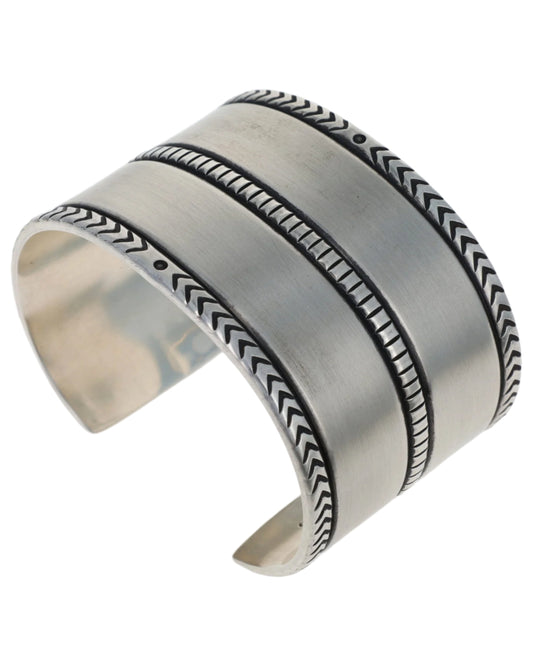
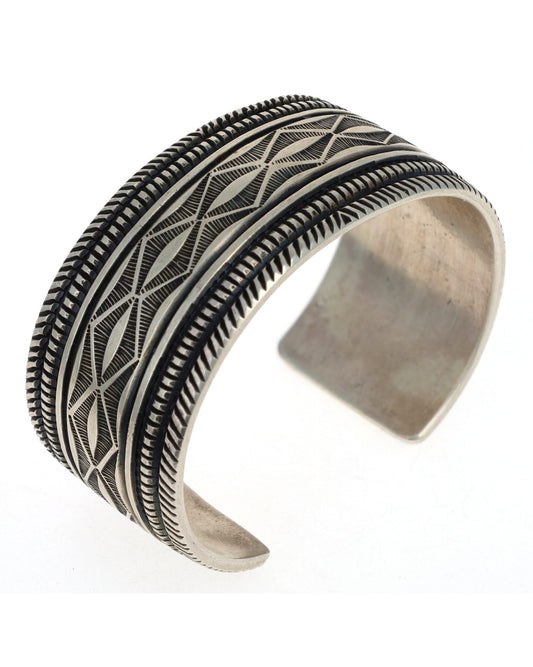
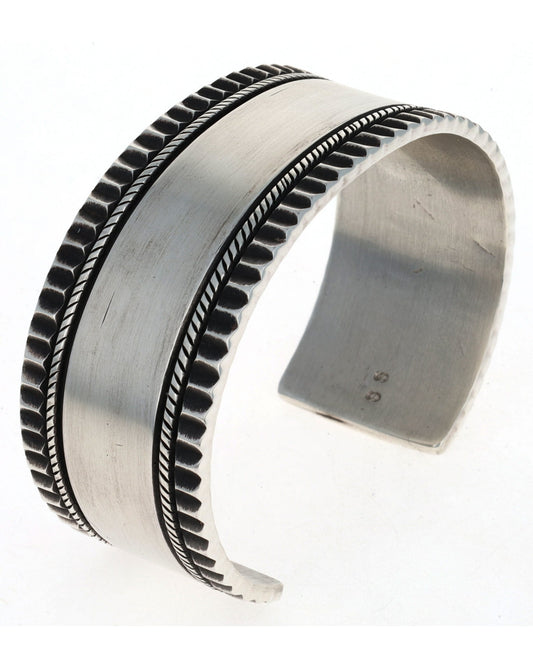
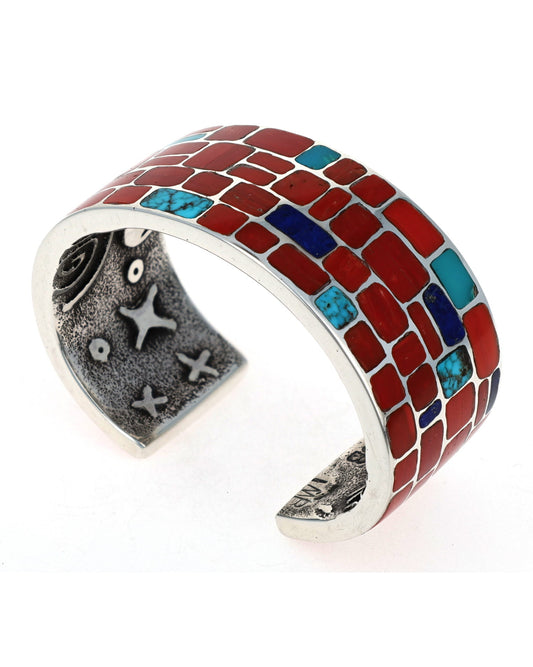
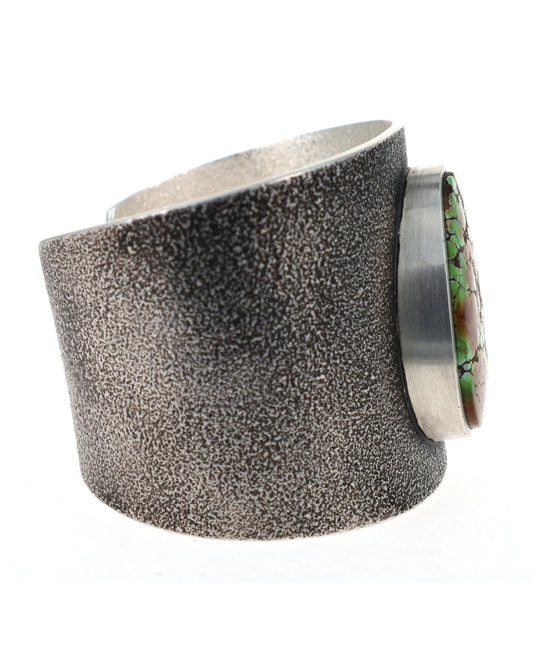
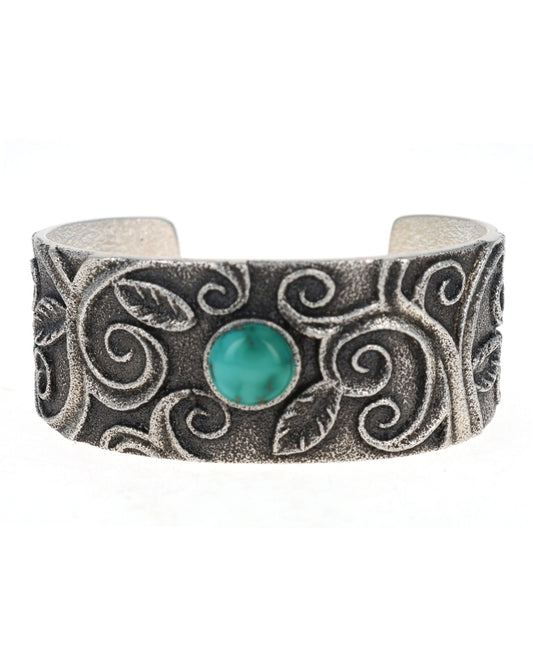
Turquoise has held deep meaning in Navajo culture for centuries, and nowhere is that more visible than in the bold silver bracelets made by Native American silversmiths across the Southwest. SilverTQ stocks a broad range of these men’s bracelets, sourced directly from Navajo, Zuni, and Hopi artists who work with natural turquoise from some of the world's most well-known and historically significant turquoise mines, such as Kingman, Bisbee, Sleeping Beauty, and Morenci. Each piece reflects the individual style of the talented silversmith behind it, making every bracelet distinct in both its look and the story it carries.
Understanding the Cultural and Historical Significance of Navajo Men’s Turquoise Bracelets
To the Navajo people, turquoise was always more than an attractive gemstone; it was something far more personal, believed to carry the spirit of the sky, bring good health, and offer protection to whoever wore it close to the body. In 1853, Atsidi Sani, widely regarded as the first Navajo silversmith, learned the art of metalworking from Mexican silversmiths, traditionally referred to as "plateros." This began a tradition that would eventually become one of the most celebrated in Native American jewelry-making. Within a few decades, turquoise set in sterling silver had become ubiquitous, while those first handmade pieces, rough and honest in form and created through sandcasting and ingot forging, continued to carry a significance well beyond their appearance.
A Navajo man wearing a heavy turquoise bracelet was making a statement that his community understood immediately. Since bracelets could be traded directly for essential goods when circumstances demanded it, such a piece reflected not only his wealth and reputation, but also his ability to provide. Many pieces were also blessed before ceremonies, rooted in the Navajo belief that turquoise actively absorbs negative energy and guards the wearer against harm. That same spirit lives on today, with skilled Navajo artists continuing to pour ancestral symbols, tribal stones, and generations of knowledge into every handmade bracelet they create.
Explore Our Navajo Men’s Turquoise Bracelets
If you’re someone with an interest in jewelry with real weight and character, this collection is worth your time. Navajo men’s turquoise bracelets are bold by default, yet many styles wear just as well on women, making them a versatile, unisex choice for anyone who likes this type of handmade Southwest jewelry. Here is what you’ll find across the collection.
Navajo Natural Bisbee Turquoise Bracelets
Bisbee turquoise is among the most prized stones in Native American jewelry, known for its deep blue color and rich dark matrix that gives each piece an unmistakable appearance. The Arizona mine closed decades ago, so authentic stones are rare, and bracelets made with them are extremely valuable. Navajo silversmiths generally set these stones in oxidized sterling silver, where the darkened metal creates a strong contrast and brings out the stone’s natural depth. Sandcast cuffs and hand-stamped styles are common here, reflecting the bold tradition of Navajo silverwork.
Natural Morenci Turquoise Bracelets
Known for its vivid blue color and natural metallic inclusions in the matrix, Morenci turquoise stands out for this quality among other stones. Since the mine is no longer actively mining turquoise, each piece is a vintage collectible and represents a finite part of Southwestern jewelry history. You can find these bracelets in various styles, from heavier cuffs to lower-profile designs, often featuring deep stampwork and sawed bezels in the silverwork. These techniques keep the stone as the natural focal point while showcasing traditional Navajo skill.
Natural Kingman Turquoise Bracelets
As one of the most well-known stones in the Southwest, Kingman turquoise ranges from vivid blue to softer blue-green, with naturally varied matrix patterns. Styles often include large single-stone cuffs and multi-stone row bracelets, typically set in heavy-gauge sterling silver with stamp work that gives each piece a strong Southwestern feel. Every Kingman stone is naturally unique in color and patterning, so no two bracelets look alike. The natural variety is a big part of what makes this category so consistently appealing. It is also one of the most versatile categories in the collection, offering something for a wide range of tastes.
Natural Royston Turquoise Bracelets
Royston turquoise comes from one of the oldest family-run mines in the American West, known for its beautiful color variations, encompassing rich greens, soft blues, and warm golden browns. A single stone can display several of these tones at once, giving every bracelet a unique look. Styles here typically include single-stone cuffs and multi-stone row bracelets set in sterling silver, often with hand-stamping and sawtooth bezels that complement the stone’s warmth. The mine’s long history and quality make Royston a favorite among collectors.
Other Collections
While Navajo jewelry traditionally features local Southwestern turquoise, artisans frequently incorporate rare, imported stones such as Armenian turquoise, Mediterranean coral, Afghani lapis lazuli, and more, and it’s common to find multiple types of stones in a single piece. Tufa stone casting and inlay work are two techniques that can be seen throughout, each bringing a distinct texture and visual quality to the designs. Ceremonial imagery, figurative subjects, and cultural motifs are also featured throughout this section, making it a good place to explore for collectors seeking variety from the mid-20th-century era.
Tips for Selecting Navajo Men’s Turquoise Bracelets
Shopping for men’s Navajo turquoise bracelets is easier when you know what to look for. From confirming their origin to finding just the right fit and aesthetic, here are a few helpful tips:
- Verify authenticity: Before buying, check for an artist stamp or hallmark, as these often confirm the piece was genuinely handmade by a Navajo artist.
- Shop responsibly: Buying from Native American-owned stores or fair-trade vendors ensures the silversmith behind the piece is paid fairly and that you’re getting something of authentic quality.
- Know your turquoise mine: Stones come from different mines, such as Bisbee and Kingman in Arizona, and Royston in Nevada, each producing unique colors and patterns that affect how the bracelet looks and what it is worth.
- Nail the fit: Measure your wrist before buying, as thicker, rigid cuffs cannot be adjusted. A good fit from the start makes all the difference in how comfortable the piece feels to wear.
- Match the matrix: The matrix, or non-gem materials that naturally run through a gemstone, can provide additional options for matching a piece to your outfit. For example, brown-toned patterns set off warm, earthy colors, while darker patterns suit cooler tones.
- Choose your width: A wider cuff gives a bold, classic look, while a thinner band is easier to wear daily and fits neatly under a shirt sleeve.
Shop Navajo Men’s Turquoise Bracelets at SilverTQ
Featuring natural stones from the Kingman, Bisbee, Royston and other well-known mines, and crafted by the hands of artists who have spent a lifetime perfecting their work, one could say that wearing a piece from SilverTQ means carrying centuries-old Navajo silversmithing tradition on your wrist. The collection is varied in style, stone, and technique, so whether you're searching for a heavy sandcast piece or a more minimalist multi-stone cuff, there is something for every taste. Browse SilverTQ today and own a piece before someone else does.
Frequently Asked Questions (FAQs)
How should I care for a Navajo turquoise bracelet?
Apply silver polish with a soft cloth on all metal parts. Use only a dry cloth on the turquoise as it is porous and can be harmed by water and chemicals. Avoid allowing your bracelet to come in contact with any cosmetics, and keep it in a pouch or lined box when not worn.
Will the bracelet tarnish over time?
Yes, sterling silver reacts to air and skin over time and darkens naturally, but a soft polishing cloth is all you need to maintain its charm. For more severe tarnishing, take your jewelry to a professional specializing in Native American jewelry for cleaning.
Are these bracelets suitable for everyday wear?
Bracelets with fewer stones are typically more practical for daily use. Remember to remove your jewelry before any activity involving water, sweat, or impact in order to protect it.