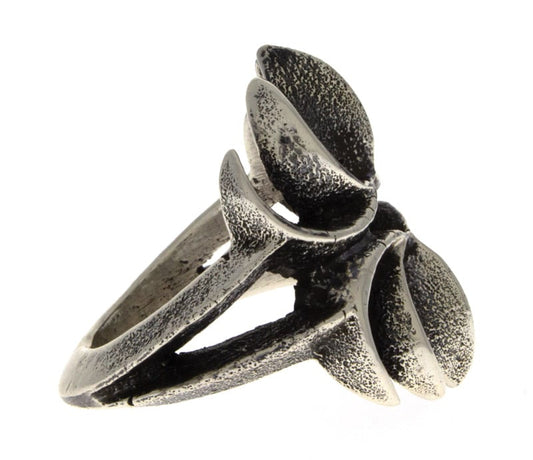
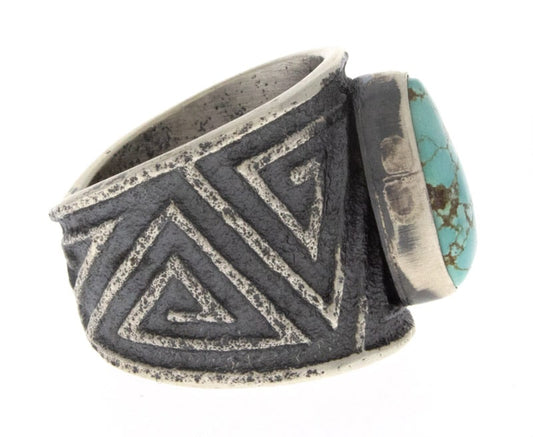
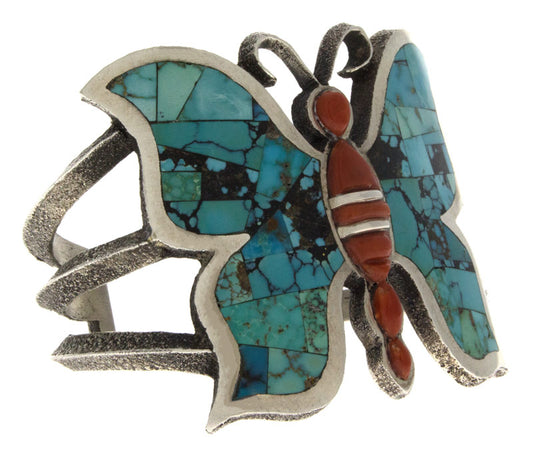
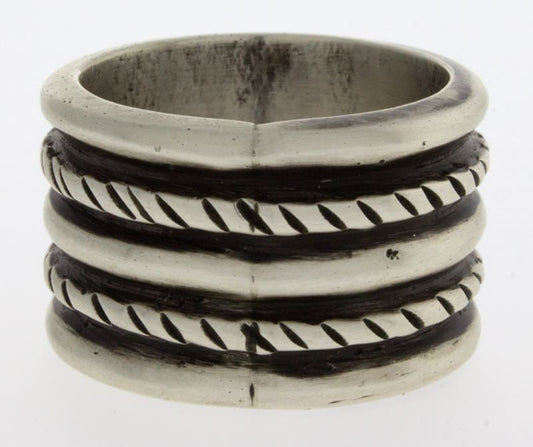
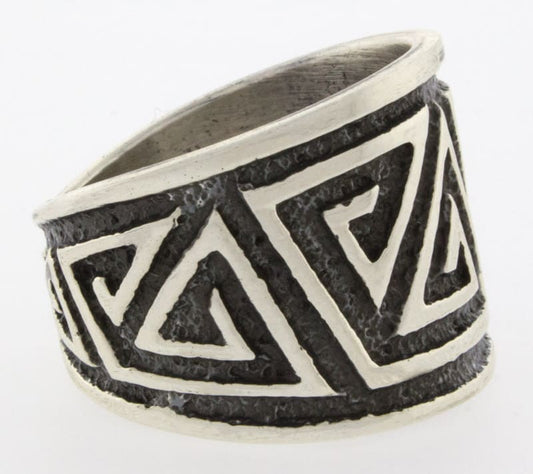
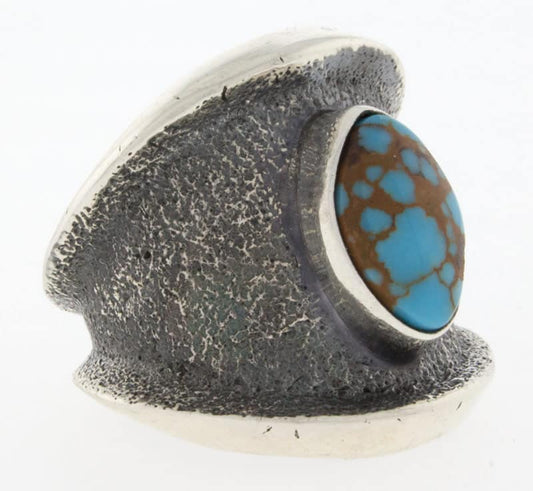
Aaron Anderson’s jewelry has a look you can instantly recognize. Each of his Navajo tufa-cast rings and bracelets carries the grain of the stone mold, giving the silver a texture that feels alive. At SilverTQ, this collection focuses primarily on tufa-cast sterling silver pieces, with select designs featuring turquoise, coral, and inlay work.
Meet Aaron Anderson
Navajo artist Aaron Anderson was born in 1970 in Gallup, New Mexico, near the Navajo reservation. He grew up around jewelry making through his stepfather, Will Begay, and his uncle, Wilford Henry, who helped introduce him to silverworking. Biographical sources also name Charles Loloma as an influence on his design direction.
Aaron Anderson began assisting his silversmith family members in 1991 and has been active as an artist since 1996. Over the years, he has earned recognition for his casting work, including blue ribbons and best-in-casting awards at the Gallup Inter-tribal Ceremonial. He is best known for tufa casting, a method that starts with a hand-carved stone mold designed in reverse and used for a single metal pour, after which it is typically destroyed due to its fragility.
Aaron Anderson’s Jewelry and Its Cultural Significance
Aaron Anderson is often associated with tufa-cast jewelry, a method long connected to Native American silver artistry in the Southwest. Tufa is a soft, porous stone made from compressed volcanic ash, and because it can be carved by hand, the artist can work directly into the mold before the metal is poured.
Texture is an important part of the design; a tufa cast ring preserves the stone's grainy surface, creating a textured pattern. Rather than being stamped on later, the design comes from the mold itself, which ensures each piece is completely unique.
Aaron Anderson’s work draws on traditional Native American design language while remaining personal and contemporary. Some pieces lean into bold geometric markings, others use nature-inspired motifs or symbolic details. At SilverTQ, we present his jewelry with respect for the artist and the Navajo silverwork tradition behind it.
Explore Aaron Anderson’s Work
SilverTQ’s Aaron Anderson collection currently centers on tufa cast rings and cuff bracelets in sterling silver. Some designs include turquoise or coral, and others use inlay to bring color into the textured metal. If you enjoy comparing stones, the broader SilverTQ turquoise jewelry collection is also a helpful place to browse.
Rings
Aaron Anderson rings showcase the more delicate side of tufa-cast sterling silver. SilverTQ offers a selection that includes wide ring forms, double-band styles, a 5-band silhouette, natural turquoise settings, and more.
The texture is what many collectors notice first; tufa-cast rings feature a rough surface that adds depth to the silver, especially around raised forms, carved lines, and stone settings.
Bracelets
Aaron Anderson’s bracelets use heavy-gauge sterling silver, which gives the cuff form a noticeable presence on the wrist. SilverTQ offers tufa-cast cuff bracelets, both with stones such as turquoise and coral, and without stones, letting the silver take center stage.
Patterns like stars and triangles add visual interest, while stones add color to the design, but the focal point is always the tuf-cast surface. The result suits buyers who want pieces with weight and detail, but still feel connected to the stone it came from.
What Makes Tufa-Cast Jewelry Different
Tufa casting all begins with the stone. The artist prepares the tufa by flattening it and making sure the two pieces fit together, then carves the design into the mold by hand. That carved space becomes the shape that molten sterling silver or gold will fill.
After the metal cools, the piece is removed from the mold, excess metal is trimmed, and the jewelry is cleaned, shaped, and finished. What sets tufa-cast jewelry apart is its surface texture: the porous stone leaves an uneven finish on the cooled metal, so exact repetition is uncommon. Many molds are delicate and are typically used only once or twice, further preventing exact replication.
Shop Aaron Anderson’s Jewelry from SilverTQ
SilverTQ has been building relationships with reputable Native American artists and carefully selecting pieces since 1978. Backed by decades of experience, Native American jewelry sold by SilverTQ is always handmade and completely authentic.
The Aaron Anderson collection reflects that approach: Each listing is chosen for its artistry, materials, and representation of the artist’s known tufa-cast style. Browse the available Aaron Anderson jewelry at SilverTQ, or explore other Native American jewelry artists to compare techniques and forms across the collection.
FAQs
Who is Aaron Anderson?
Aaron Anderson is a Navajo artist and silversmith from Gallup, New Mexico. He is known for exemplifying the tufa-cast jewelry method and has been active as a silversmith since 1996.
What is Aaron Anderson’s jewelry known for?
Aaron Anderson’s jewelry is known for its use of textured sterling silver, bold geometric patterns, and large turquoise stones. His pieces often connect traditional Native American silver artistry with a modern sense of form.
What is tufa-cast jewelry?
Tufa-cast jewelry is made by carving a design into two parts of a tufa stone, connecting them, and then pouring molten sterling silver or gold into the mold. The stone gives the finished metal an irregular surface, and many molds can only be used once or twice before breaking.
What materials are commonly used in Aaron Anderson’s pieces?
SilverTQ’s Aaron Anderson collection includes sterling silver pieces with select designs featuring natural turquoise and coral.
Does Aaron Anderson make rings and bracelets?
Yes. SilverTQ’s collection includes tufa-cast rings and cuff bracelets by Aaron Anderson. Inventory may change because each piece is handmade, and many designs are one-of-a-kind. Check back often for new pieces.
How can I identify Aaron Anderson jewelry?
Many Aaron Anderson pieces are marked with the artist’s hallmark, two uppercase A’s or his name stylized as AaronA. Because markings can vary by piece, review the listing details and purchase from a reputable dealer with experience in authentic Native American jewelry.
How should I care for tufa cast sterling silver jewelry?
Store the piece in a dry place and clean the sterling silver with silver polish. Use care around textured surfaces, turquoise, coral, and inlay to preserve the details of the piece.
What is your return policy?
You can return the product within 14 days of receiving it, except for purchases made with PayPal. Beyond this time, returns within 30 days are eligible for credit toward an item of the same or lesser value. Items must be returned in their original condition. Review the Returns page for SilverTQ’s full return policy.
How do I measure ring and bracelet sizes?
For rings, wrap a thin strip of paper around the base of your finger, mark the overlap, and measure the flat length. Compare that measurement with a standard ring chart. For wide bands, it is recommended to go up a half size.
For bracelets, measure the wrist area where you prefer the cuff to sit. Compare this to the listed inner circumference, including the metal length plus the gap.
What payment options can I use?
Available payment options include all major credit cards, PayPal, and financing options through Shop Pay.