Explore Gold Rings

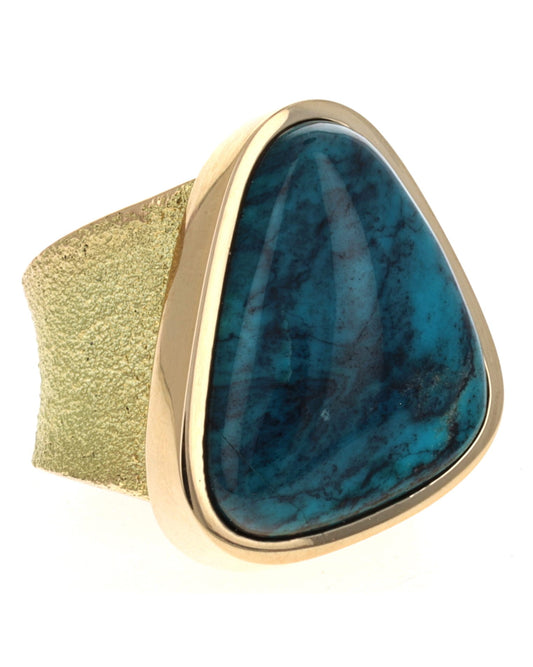
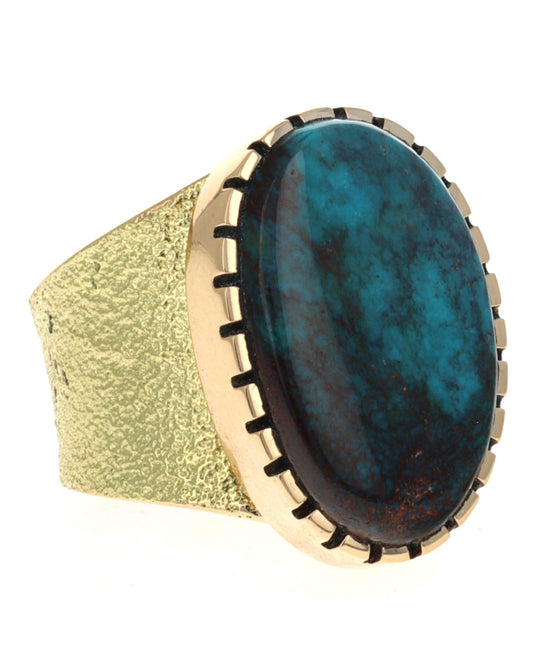
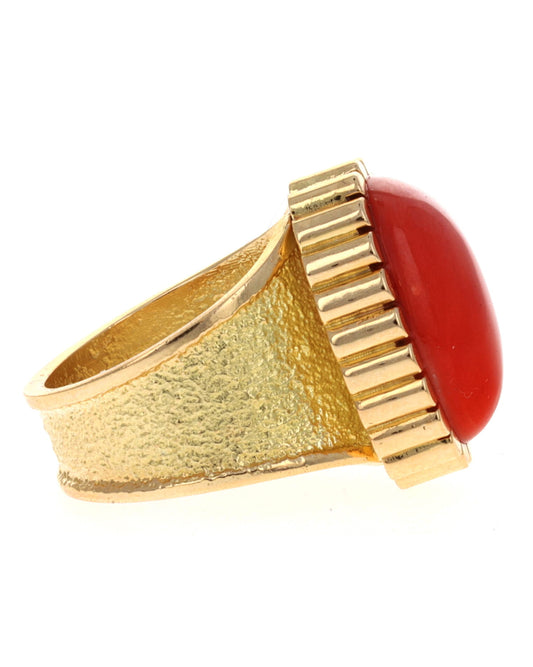
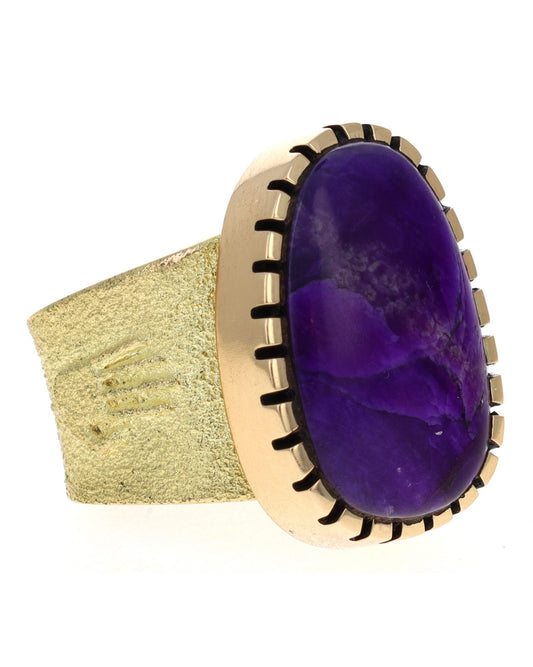
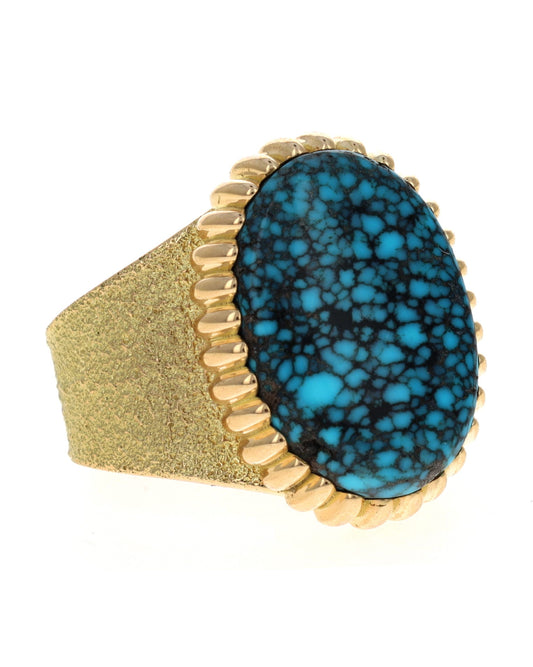
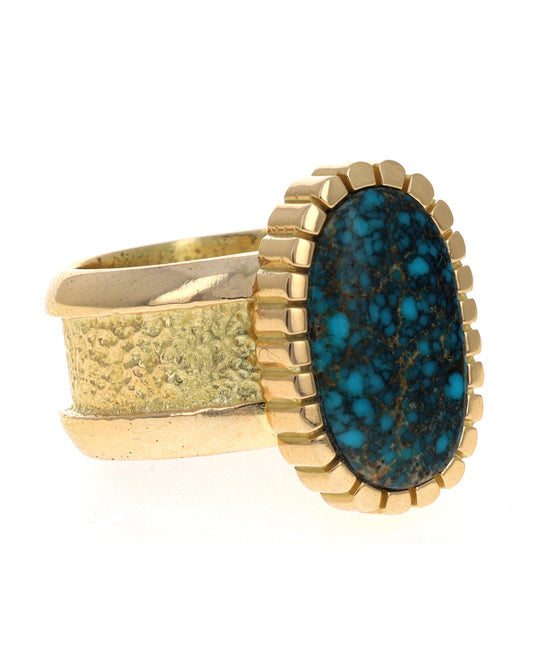
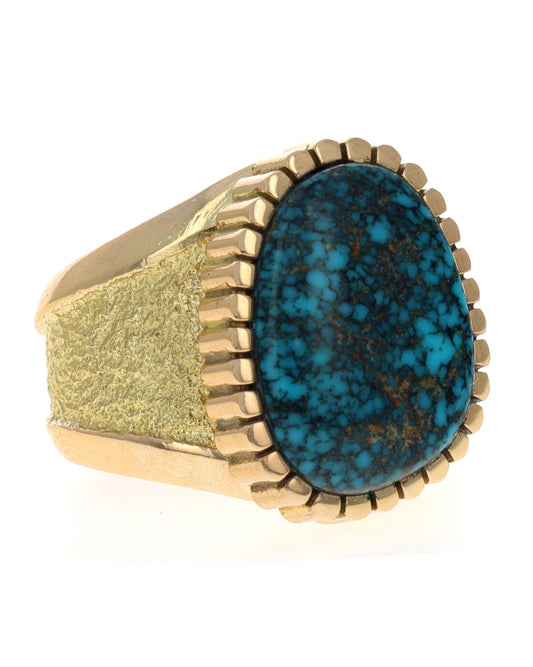
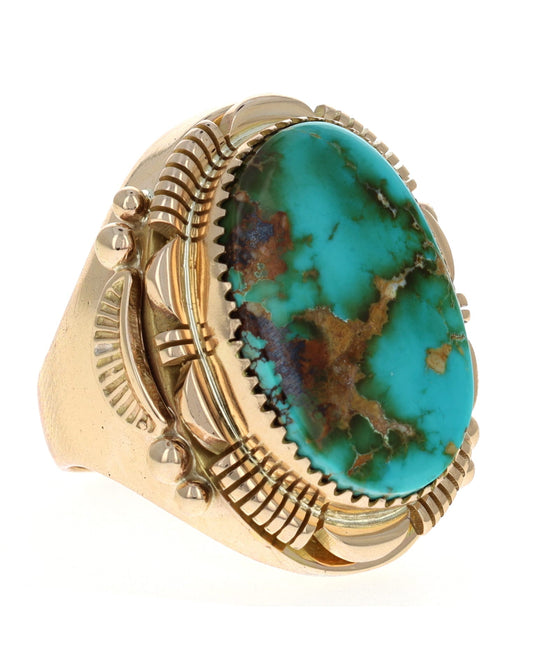
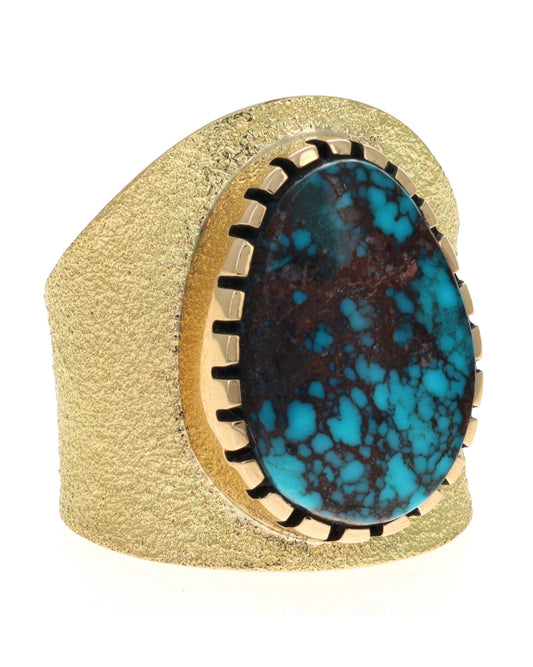
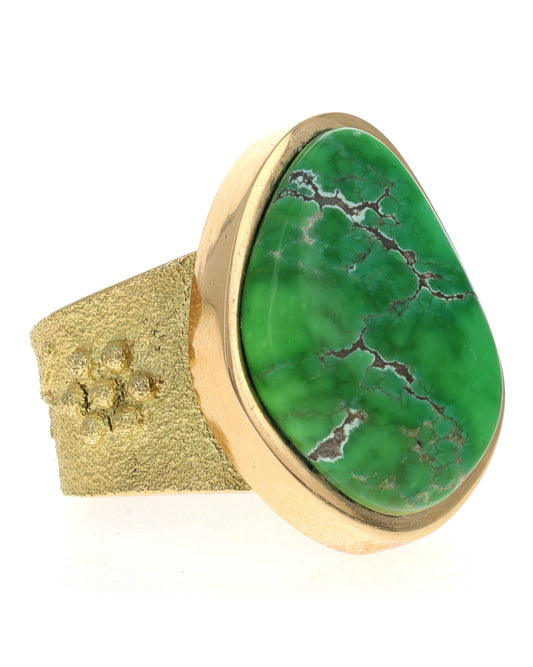
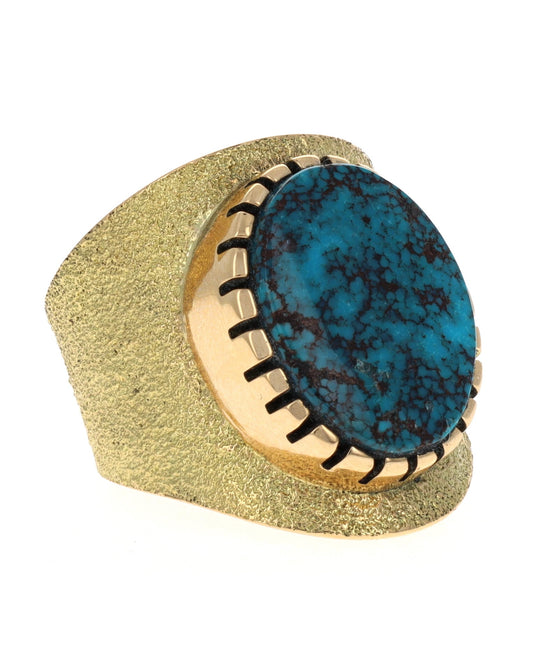
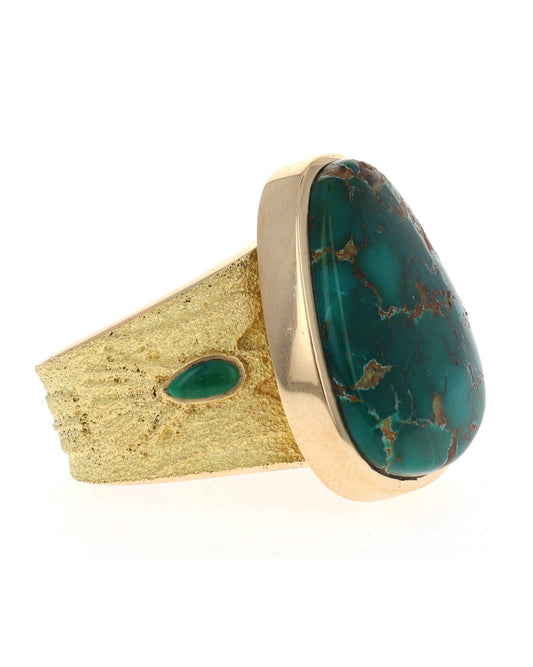
SilverTQ's Native American gold rings bring together two of the Southwest's oldest jewelry traditions: hand-stamped Navajo metalwork and the region's finest turquoise and coral. Set in 14K and 18K gold, each ring is handmade by a Navajo artist working in tufa casting or stamping, with some pieces finished with lapidary inlay as well. Each piece reflects an artist's individual body of work and, in most cases, is entirely one of a kind.

The Role of Gold in Native American Jewelry

Silver has been the standard for Navajo jewelry for more than a century, and that technique traces back further than most buyers realize. Navajo blacksmithing began in the 1850s, when a smith named Atsidi Sani learned the trade from a Mexican blacksmith, Nakai Tsosi. Silversmithing followed less than a decade later, and by the early 1870s it had become an integral part of Navajo life. 

Gold has only recently become popular among contemporary artists. A Hopi jeweler and sculptor named Charles Loloma is credited with popularizing the use of gold and gemstones in ways previously unseen in Hopi jewelry. In the late 1950s, Charles Loloma was the only major Native American jewelry maker using gold, as well as other unconventional materials for the time like sugilite, ivory, pearls, and diamonds. While his techniques drew criticism at the time, he is still regarded as an influential figure in Native American art.

14K vs. 18K Gold 

Karat measures how much of a piece is pure gold out of 24 parts. An 18K ring is 75% gold, which gives it a deeper, richer color, while a 14K ring runs closer to 58% gold, for a slightly lighter shade and a bit more resistance to everyday wear. Both appear throughout this collection, and the artist typically chooses the karat based on the design and the stone it's set with.

Explore the Collection

The collection spans a handful of techniques and stones, and it shifts as artists finish new work. Here's what you'll typically find.

Tufa Cast Gold Rings

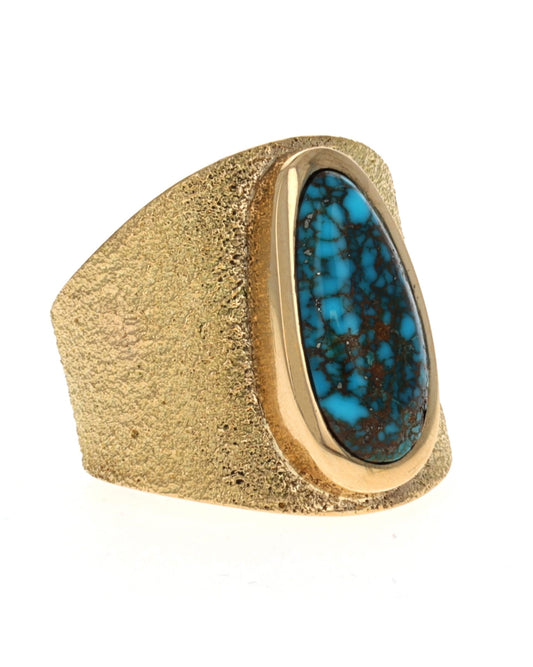
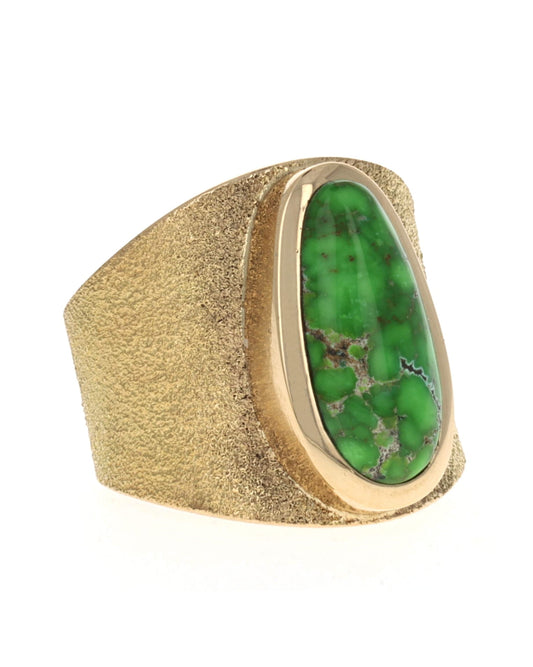
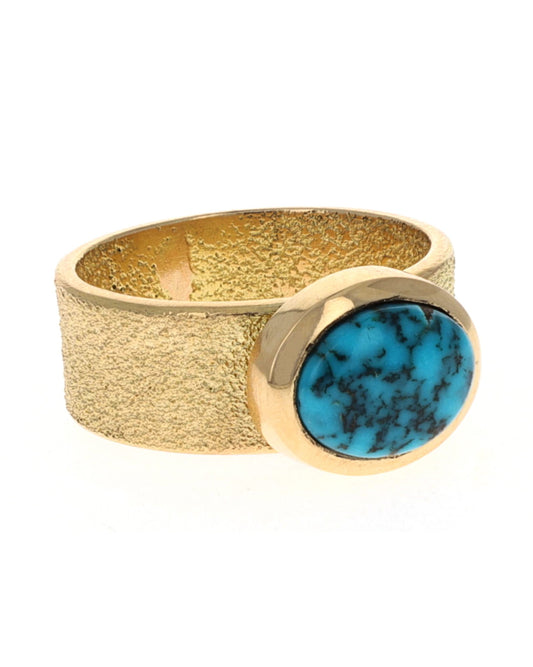
Some of the collection's most detailed rings, including work from Darryl Dean Begay and Robert W. Begay, are tufa cast. To create a tufa cast, the artist carves a design directly into a block of volcanic tufa stone, then pours molten gold into the hand-cut mold. Because each mold is carved individually and can only be used once before breaking, no two tufa cast rings turn out exactly alike, even from the same artist.

Gold Rings With Turquoise

Turquoise is the stone most associated with this collection, and Bisbee, Royston, Carico Lake, Lone Mountain, and Indian Mountain turquoise all typically appear, each with a color range and matrix pattern tied to the mine it came from. That's part of why a Royston stone can run green while a Bisbee stone, set by the same artist, runs closer to blue. 

Gold Rings With Coral and Sugilite

Turquoise isn't the only stone you’ll see set in gold. Japanese Momo coral and sugilite both appear in the collection, usually set as a single center stone against a gold band.

Multi-Stone Inlay Gold Rings

Some rings combine multiple stones in a single setting instead of featuring one center stone. These multi-stone inlay pieces are cut and polished by hand, then fitted together stone by stone, and the combination of colors and materials is usually unique to that one ring.

Meet the Artists Behind the Collection

The artists behind this collection come from Navajo families with generations of jewelry making behind them.

Robert W. Begay

Robert W. Begay is a Navajo tufa cast artist and the son of Darryl Dean Begay and Rebecca T. Begay. He began carving tufa stone as a young child, learning the technique from his father before developing his own designs. His parents won Best of Show at the Santa Fe Indian Market, and that same event has recognized Robert's own work in the years since, a track record that reflects a family long established in tufa cast jewelry.

Darryl Dean Begay

Darryl Dean Begay is a respected Navajo tufa cast artist who often works alongside his wife, Rebecca T. Begay. Together, the two have helped set the standard for tufa cast jewelry within the Navajo community, and Darryl's gold pieces bring that same tufa cast detail into 14K and 18K settings.

Isiah M. Begay

Isiah M. Begay comes from a multi-generation family of Navajo jewelers. His parents, Philander Begay and Shanibah Begay, are jewelers as well, and Isiah has built on that foundation with precise lapidary inlay work, cutting and fitting high-grade stones into gold settings with a level of detail that has drawn recognition at Navajo art shows.

Alvin Yellowhorse

Alvin Yellowhorse has worked as a respected Navajo artist since the mid-1990s and is known for precise cutting and filing. His gold rings in this collection favor multi-stone inlay work, bringing multiple stones together in a single setting with the same close attention he brings to every piece.

Choosing the Right Gold Ring

A gold ring is on the higher end of jewelry investment, so it's worth thinking through sizing and stone color before you settle on one.

Ring Sizing

Every ring in this collection is one-of-a-kind and comes in a single fixed size, meaning it can’t be adjusted or customized. For this reason, it’s especially important to order the correct size. Measure an existing ring you own or have a jeweler measure your finger, then confirm your size before ordering.

Matching Stone and Gold Tone

Stone color plays a bigger role against gold than it does against silver. A blue-heavy stone like Indian Mountain turquoise stands out sharply against the warmth of 18K gold, while a greener stone like Royston reads a little softer next to the same metal. Consider what colors appear most often in your current jewelry collection and wardrobe.

Gifting and Occasions

Gold rings sit at a higher price point than their sterling silver counterparts, which makes this collection a natural fit for an anniversary, a milestone birthday, or any gift meant to mark something significant.

Caring for Your Gold Ring

Store your gold ring in a soft pouch, separate from other jewelry, to avoid scratching the metal or dislodging a set stone. A gentle polishing cloth is usually enough to keep the gold looking its best; avoid soap and water, since the stones in these rings are often set on a base that can shift if it gets wet. If a piece in this collection combines gold with sterling silver accents, treat the silver portion with a standard silver polish rather than the polishing cloth used for the gold.

Why Choose SilverTQ

SilverTQ has been part of the Native American jewelry trade since 1978. That relationship, now in its fifth decade, is what allows SilverTQ to hand-select gold rings from artists whose families have worked in the trade for generations. 

Every piece listed is handmade, never a replica or a mass-produced substitute. The gold rings collection is curated rather than exhaustive, so what you see reflects pieces the SilverTQ team has personally chosen for quality and design. Orders ship free within the United States, with international shipping available at an additional charge, and the collection is included in SilverTQ's periodic sales throughout the calendar year.

Frequently Asked Questions

What is the difference between 14K and 18K gold?

Karat refers to how much pure gold a piece contains out of 24 parts. 18K gold is 75% pure gold, giving it a deeper color and a higher price point, while 14K gold is around 58% pure gold, which is slightly lighter in tone and a bit more resistant to scratching for everyday wear. Both are used across this collection, and the choice usually comes down to the design and the stone the artist is pairing it with.

Do these rings combine gold with sterling silver, or are they gold throughout?

Most rings in this collection are gold throughout, in either 14K or 18K, though some pieces include gold accents alongside the silver. Each ring's product description specifies the metals used.

How do I find my ring size?

Since every ring here is one-of-a-kind and made in a single fixed size, finding your ring size is key. Use a piece of paper to measure the circumference of your finger or an existing ring, then compare it to a ruler, or visit a jewelry store to get professionally sized. 

Do you ship gold jewelry internationally?

Yes. SilverTQ ships free within the United States and offers international shipping at an additional charge through UPS.

How should I store and clean a gold ring?

Keep gold rings in a soft pouch, away from other jewelry, and clean them with a gentle polishing cloth rather than soap and water. If a piece includes sterling silver alongside gold, use standard silver polish only on the silver portion.